
What official details have been confirmed regarding the India vs Brazil football match?
The All India Football Federation (AIFF) officially announced an international football fixture featuring India and five-time FIFA World Cup champion Brazil. The high-profile match is scheduled to take place at the Vivekananda Yuba Bharati Krirangan (VYBK), commonly known as the Salt Lake Stadium, located in Kolkata, West Bengal. This fixture represents a rare and significant opportunity for the Indian national team to host one of the most decorated nations in global football on home soil. According to official statements from the AIFF, bringing a premier international football power like Brazil to Kolkata reflects ongoing efforts to stage top-tier global fixtures in India's traditional football hubs. The announcement has immediately generated high public interest among sports enthusiasts across the country. Local authorities and sports governance bodies have begun setting operational frameworks to manage the match, which is expected to draw a capacity crowd to one of Asia's largest football venues. While AIFF has established the venue and opponent, further administrative details regarding match administration, ticketing rollout, and exact kickoff schedules are being finalized in coordination with state bodies and international organizers.
Where is the venue located, and what is its history with major sporting events?
The match will be hosted at the Vivekananda Yuba Bharati Krirangan (VYBK), situated in the Salt Lake area of Kolkata, West Bengal. Stadium infrastructure and spectator capacity make VYBK one of the landmark football facilities in Asia. Historically, the stadium has been the primary venue for national team games, domestic league rivalries, and international tournaments, including key matches of the 2017 FIFA U-17 World Cup. Kolkata's deep-rooted football culture makes the city a natural selection for international fixtures of this magnitude. The Salt Lake Stadium has previously accommodated massive audiences for iconic sporting figures and top European and South American teams. Due to the massive scale of the venue, organizing events at VYBK requires multi-layered coordination between the West Bengal state government, sports ministry officials, local police departments, and stadium management to oversee venue maintenance, pitch preparation, turnstile entry, and spectator movements inside and outside the bowl.
What security arrangements are Kolkata authorities implementing for the fixture?
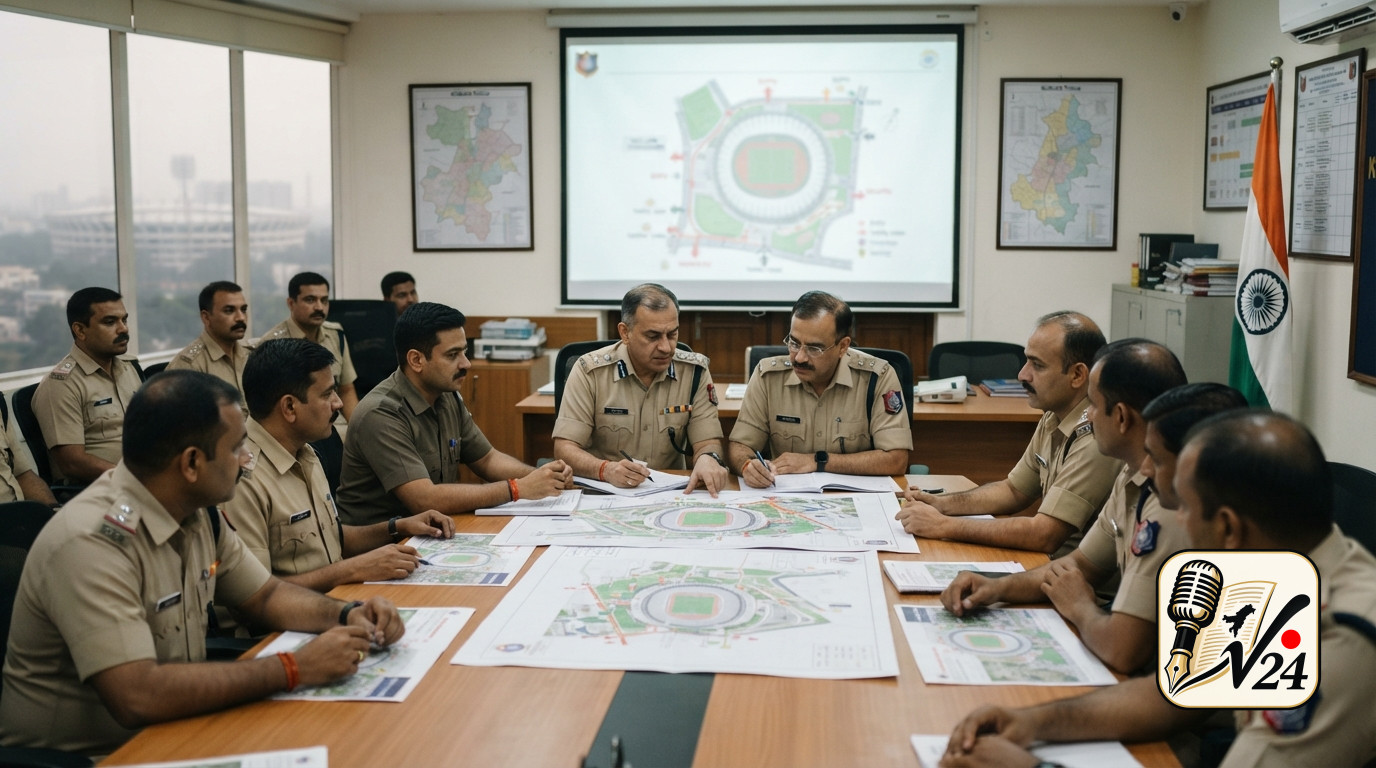
To accommodate the anticipated influx of spectators and high-profile international dignitaries, Kolkata law enforcement agencies and venue managers have drawn up a comprehensive, mega security plan for the Salt Lake Stadium. The plan encompasses perimeter security, multi-tier access control, surveillance monitoring, and specialized traffic routing around the Salt Lake stadium complex. Local authorities report that security preparations will involve heavy deployment of police personnel, quick response teams, and dedicated control posts both inside the stadium premises and along approaching arteries. Outer perimeter checkpoints will be established to verify tickets and credentials long before fans reach the stadium turnstiles. Furthermore, specialized crowd management strategies are being structured to monitor queue lines, prevent entry gate congestion, and maintain clear emergency evacuation routes. Advanced CCTV surveillance networks around the venue will be integrated into a central command center overseen by senior officers of the Kolkata Police.
Why are organizers taking extra precautions for crowd management and event planning?
The cautious approach adopted by local authorities is heavily influenced by past logistical challenges experienced during high-profile football events in the city. Media reporting highlights a 'once bitten, twice shy' mindset among organizers, directly referencing lessons learned from previous major occurrences, such as the chaotic situations surrounding Lionel Messi's visit to Kolkata years prior. During past mega-events featuring global superstars, overwhelming fan enthusiasm led to severe overcrowding, access management lapses, and security friction at entrance gates and VIP areas. To prevent a recurrence of these issues, state officials and police leadership are enforcing stricter protocols for credential distribution, perimeter security distance, VIP movement isolation, and overall crowd movement. Authorities are prioritizing controlled spectator flow and rigorous security verification to guarantee that high public enthusiasm does not undermine physical safety, stadium infrastructure, or the smooth execution of the match.
How are the AIFF and local authorities coordinating event preparations?
The execution of an international fixture involving Brazil requires synchronized operations between the national governing body, the AIFF, and West Bengal state administrative authorities. Joint operational meetings are centered around aligning international football standards with local civil and security capabilities. AIFF delegates are responsible for liaising with team management, ensuring pitch conditions meet FIFA specifications, organizing team logistics, and coordinating broadcast facilities. Simultaneously, Kolkata municipal bodies, health departments, and public transport operators are tasked with supporting external infrastructure. This includes setting up emergency medical stations at the venue, arranging additional public transportation services to handle spectator dispersal post-match, and managing parking zones surrounding the Salt Lake precinct. Continuous inter-agency coordination is aimed at maintaining operational synergy right up to matchday.
Who are the primary administrative bodies overseeing the match's execution?
The organization of the India vs Brazil fixture involves several key institutional stakeholders: 1. The All India Football Federation (AIFF): Acts as the host governing body managing official sporting compliance, team agreements, and overall event scheduling. 2. Kolkata Police and West Bengal State Administration: Responsible for executing the multi-tier security plan, traffic diversions, public safety monitoring, and VIP security details. 3. Sports and Youth Services Department of West Bengal: Oversees venue preparation, stadium maintenance, and facility management at the Vivekananda Yuba Bharati Krirangan. 4. Visiting Delegations and Brazilian Football Authorities: Coordinate arrival logistics, training schedules, team security preferences, and match requirements alongside host counterparts. Each entity plays an interdependent role in ensuring that security standards, international team protocols, and spectator services operate smoothly throughout the event.
When will fans receive official updates on ticket sales and operational guidelines?
While the AIFF has formally confirmed the fixture at Salt Lake Stadium, specific dates regarding the public sale of tickets, ticket pricing tiers, official entrance timing, and stadium gate guidelines will be communicated through official AIFF channels and state notification systems as event planning progresses. Authorities have indicated that ticketing procedures will likely feature digital sales mechanisms and anti-scalping controls to regulate distribution and prevent fraudulent ticketing practices. Public advisories regarding allowed personal items, prohibited equipment, traffic diversions, and metro/bus transport schedules around the Salt Lake area will be issued closer to the match date. Fans are advised to monitor official announcements from the AIFF and local administrative bodies for verified operational updates.
Sources
More from Sports