

What did Amir Jangoo accomplish during the 3rd ODI between India and West Indies?
During the third One Day International (ODI) between India and the West Indies on October 3, 2026, West Indies batter Amir Jangoo delivered an impactful batting performance by scoring 67 runs against the host nation. Facing a formidable first-innings total established by India, Jangoo took on the responsibility of anchoring the early stages of the West Indies chase. His half-century was defined by controlled strokeplay and steady run accumulation, propelling the West Indies to a fluent and energetic start at the top of the order. Jangoo's 67-run knock was critical in neutralizing the initial threat posed by India's opening bowlers. By combining defensive resilience with selective boundary hitting, he ensured that the visiting side stayed aligned with the required scoring tempo during the opening powerplay and middle overs. The inning marked one of the individual highlights for the West Indies in the match, demonstrating his capability to perform against a high-caliber international bowling attack under substantial pressure. Beyond simply providing a competitive start, the performance elevated his personal profile in international cricket, securing his entry into an elite statistical list of batters who have achieved specific performance milestones during ODI matches against India.
How did West Indies build their early innings foundation around Amir Jangoo's half-century?
The West Indies constructed their run-chase response primarily around the solid foundation laid by Amir Jangoo's 67 runs. Chasing a high target set by the hosts, the West Indian top order needed both fast-paced scoring and wicket preservation to remain competitive throughout the 50-over contest. Jangoo fulfilled this dual role by taking charge of the scoring rate early in the innings, ensuring that the scoreboard kept moving without taking unnecessary risks. His approach allowed the West Indies to construct a brilliant opening phase, giving the visitors momentum during the difficult initial overs. By finding gaps in the field and capitalizing on loose deliveries, Jangoo prevented Indian seamers from building pressure through dot balls. His ability to build a sustained knock provided his batting partners with the confidence to settle into their roles. The 67-run contribution proved pivotal in keeping West Indies within reach of the required run rate during the first half of their innings, setting up a competitive base before India's bowling unit mounted a comeback.
Who starred for India in the first innings to set the target of 351 runs?
India set a massive first-innings total of 351 runs for 7 wickets in their allotted 50 overs, largely driven by a standout century from wicketkeeper-batter KL Rahul. Batting with authority and tactical flexibility, Rahul anchored the middle overs and accelerated toward the end of the innings to ensure India posted an imposing total on the scoreboard. Alongside Rahul's century, the Indian top and middle order contributed vital runs to assemble the final score of 351/7. India's batting lineup capitalized on favorable scoring conditions, taking calculated risks and systematically breaking down the West Indian bowling attack. Captain Rohit Sharma also featured prominently in the match narrative before his dismissal, setting up the foundation alongside the rest of the top order. The total of 351 created immense pressure on the visiting team prior to the commencement of the second innings, requiring the West Indies to maintain an elevated run rate right from the opening ball.
How did Mohammed Siraj impact the match after KL Rahul's batting performance?
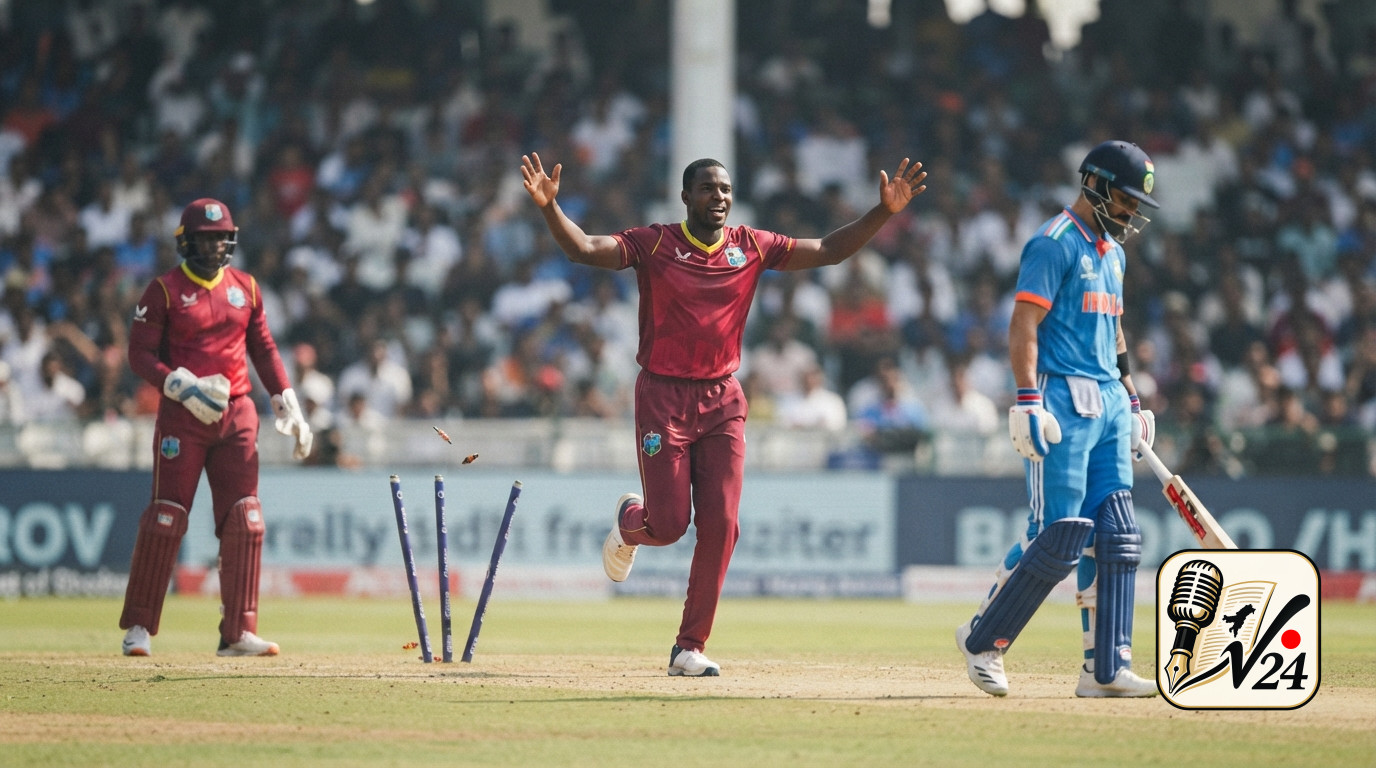
Following India's strong batting display led by KL Rahul, fast bowler Mohammed Siraj played a crucial role in breaking the West Indies' momentum during the second innings. As Amir Jangoo and the West Indian top order constructed a powerful response, the Indian team needed a crucial tactical breakthrough to slow down the run flow and put pressure back on the visitors. Mohammed Siraj provided that initial breakthrough for India, claiming the first wicket of the West Indian innings and disrupting their fluent opening partnership. Siraj's disciplined line and length under high-scoring conditions proved effective in creating mistake opportunities for the batters. By removing an key top-order batter, Siraj halted the momentum that Jangoo and his partners had established, allowing India's bowling group to regain control over the match tempo and restrict the middle-order run flow as the chase progressed.
What statistical milestone or elite list did Amir Jangoo join during his 67-run knock?
Amir Jangoo's 67-run innings against India earned him a place on an elite statistical list of international batters who have achieved rare milestone records against the Indian cricket team in ODI format. Scoring a composed half-century against a high-profile opponent on their home territory serves as a key benchmark for visiting batters, and Jangoo's numerical contribution placed him alongside an exclusive group of players with comparable statistical achievements in recent series history. While specific analytical criteria for elite lists often encompass parameters such as speed of scoring, run milestones reached in early career innings, or specific boundary counts against top-tier bowling line-ups, Jangoo's entry into this category underscores the quality of his 67-run effort. His performance highlighted his growth on the international stage, drawing widespread recognition from sports analysts and statistical tracking platforms following the conclusion of his knock.
When did this 3rd ODI match take place and what was its significance in the series?
The third ODI match between India and the West Indies took place on October 3, 2026. As the third installment of the bilateral series, the match represented a key competitive fixture for both national teams as they sought to finalize their combinations and build performance consistency in 50-over international cricket. For the West Indies, the match offered an opportunity to showcase young talent like Amir Jangoo against one of the world's leading white-ball teams. For India, the fixture served as a platform to test high-scoring strategies, as evidenced by their total of 351/7, while giving senior players like Rohit Sharma and key performers like KL Rahul and Mohammed Siraj valuable game time. The individual battle between Jangoo's half-century and India's bowling response formed one of the primary narratives of the October 3 contest.
Where did India establish their control during the key phases of the match?
India established operational control over the match during two primary key phases: late in their own batting innings and during the middle overs of the West Indies run chase. In the first half of the match, India took command through KL Rahul's century, which pushed the host nation past the 350-run mark to finish on 351/7. This high score created psychological pressure on the opposition prior to the change of innings. In the second half, although Amir Jangoo gave West Indies a flying start with his 67 runs, India regained control once Mohammed Siraj provided the initial breakthrough. By breaking the top-order momentum and picking up vital wickets, India successfully restricted the scoring avenues, ensuring that the required run rate escalated beyond reach for the West Indian lower order as the match approached its conclusion.
Why has Amir Jangoo's performance against India generated widespread attention?
Amir Jangoo's performance against India generated substantial interest across cricket news platforms and search trends primarily because of his high-impact 67-run knock against a top-tier international opponent. Rising performers in international cricket attract significant attention when they deliver prominent scores against established teams like India, particularly when facing a steep target of 352 runs. Additionally, Jangoo's inclusion in an elite statistical list following his half-century created a specific analytical talking point for media outlets and fans tracking player statistics. His ability to handle India's opening bowling attack, combined with the context of a high-scoring international fixture on October 3, 2026, made his performance a widely discussed story across digital sports networks.
Sources
- India TV News: Amir Jangoo propels West Indies to brilliant start against India, joins elite list after 67-run knock
- BCCI: IND vs WI 2026, 3rd ODI: Rohit Sharma Wicket
- The Times of India: India vs West Indies Live Score, 3rd ODI: Mohammed Siraj gives India first breakthrough after KL Rahul's century powers hosts to 351/7
More from Sports