
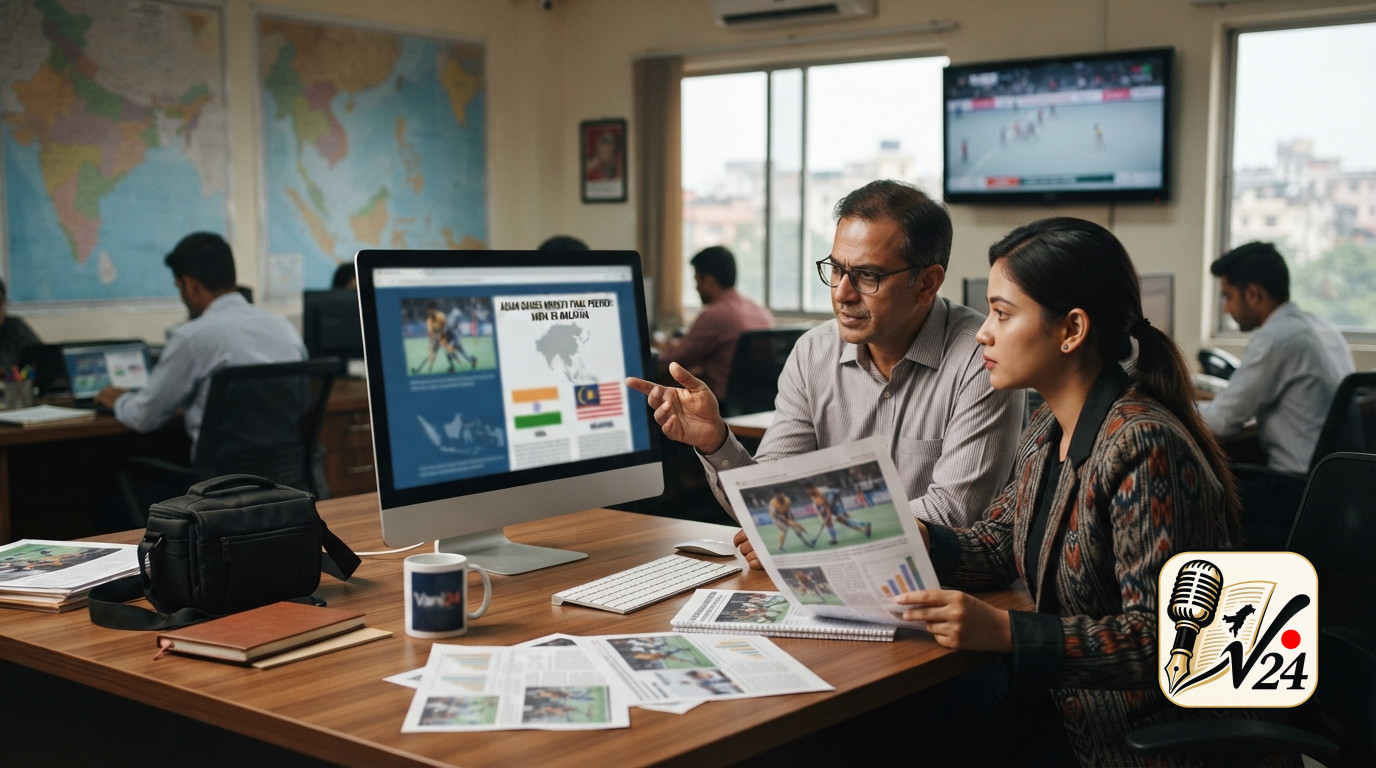
What is the significance of the Asian Games 2026 men's hockey final between India and Malaysia?
The Asian Games 2026 men's hockey final presents a major championship contest between two of the continent's top hockey nations, India and Malaysia. This gold medal encounter represents the pinnacle of men's hockey at the Asian Games, bringing together the two finalists after a demanding tournament schedule. For India, the fixture serves as an opportunity to cement its position at the top of Asian hockey, while Malaysia aims to capture the gold medal in a high-stakes continental matchup. Beyond the prestige of claiming the Asian Games championship, the final carries critical implications for global hockey qualification pathways, making it one of the most anticipated fixtures on the international sports calendar. Media coverage and live commentary around the event reflect high public interest, as fans across India and internationally track the live score and final results of this decisive encounter.
Why is the gold medal match against Malaysia crucial for India's 2028 Olympic aspirations?
The Asian Games 2026 gold medal match carries significant weight because the winner secures a direct berth for the 2028 Olympic Games. In international hockey, winning the regional continental championship offers the most direct pathway to the Olympic tournament, allowing the gold medalist to avoid additional, highly competitive Olympic qualification tournaments later in the cycle. For the Indian men's hockey team, securing direct qualification through an Asian Games victory provides valuable certainty and operational clarity for their long-term training and preparation plans leading up to 2028. Facing Malaysia in the final means that the single match holds double the value: winning not only earns the Asian Games gold medal but also locks in a coveted spot at the 2028 Olympic Games without the need for secondary play-off competitions.
How did the Indian men's hockey team secure their place in the Asian Games 2026 final?
India advanced to the Asian Games 2026 gold medal match after earning a victory against traditional rivals Pakistan in a fiery semi-final contest. The semi-final match required intense physical and tactical discipline, with both teams competing aggressively for a spot in the final. India managed to navigate the high-pressure environment of the knockout fixture, earning the decisive win required to progress. That semi-final victory set up the title clash with Malaysia, who successfully navigated their side of the tournament bracket to reach the final. India's path to the gold medal match underlines the team's resilience during high-stakes knockout hockey, overcoming severe pressure in the semi-finals to keep their title defense and Olympic qualification ambitions alive.
What key observations did captain Harmanpreet Singh share following the semi-final win over Pakistan?
Following the intense semi-final clash against Pakistan, Indian team captain Harmanpreet Singh addressed the team's performance, emphasizing that India cannot afford to make silly mistakes in crucial moments. Despite securing victory and advancing to the final, Harmanpreet highlighted the importance of maintaining absolute tactical discipline, ball retention, and defensive composure against top-tier opponents. His post-match reflections pointed out that high-stakes matches offer very small margins for error, and lapses in concentration or unforced errors can turn the momentum in favor of the opposition. Harmanpreet's emphasis on rectifying mistakes serves as an operational warning for the team as they prepare to face Malaysia in the championship match, where precise execution and minimal errors will be essential to securing the gold medal.
Why does achieving back-to-back Asian Games gold medals mark a historical milestone for Indian hockey?
For the Indian men's hockey team, competing in the Asian Games 2026 final offers the opportunity to achieve historic back-to-back Asian Games gold titles. Retaining a continental title in modern field hockey is a challenging task due to the rising competitiveness and tactical evolution of opposing Asian teams. Securing consecutive gold medals would demonstrate sustained excellence, depth of talent, and strong structural stability within the Indian hockey program across multiple tournament cycles. A victory against Malaysia would reinforce India's status as a dominant power in Asian hockey, adding another prestigious chapter to the nation's rich hockey legacy while ensuring continuity in championship-level performance on the international stage.
Who are the primary competitors in this Asian Games title clash and what is at stake for Malaysia?
The primary competitors in this major fixture are the men's national field hockey teams of India and Malaysia. Malaysia enters the gold medal match as a established continental force capable of challenging any top-ranked team on a given day. For Malaysia, defeating India in the Asian Games final represents a major opportunity to claim continental supremacy and secure direct qualification for the 2028 Olympic Games. The matchup presents a contrast in playing styles and tactical approaches, with both sides possessing dynamic attackers and experienced defensive units. Given the high stakes—an Asian Games gold medal and an immediate ticket to the 2028 Olympics—Malaysia approaches the match with total commitment, aiming to disrupt India's rhythm and claim the continental title.
What tactical elements and performance factors could determine the outcome of the India versus Malaysia match?
The outcome of the India versus Malaysia final is expected to hinge on several core operational factors, including penalty corner conversion rates, defensive discipline, and transition speed. As highlighted by captain Harmanpreet Singh after the semi-final, minimizing unforced errors and silly mistakes in the defensive third will be critical for India. Effective management of game tempo, avoiding unnecessary cards or discipline breakdowns, and capitalising on scoring chances in the opposition circle will decide which team controls the match. Both teams rely on quick counter-attacks, making mid-field interception and defensive organization paramount. Whichever side executes its game plan with higher composure and tactical precision under pressure is likely to prevail in this winner-take-all gold medal final.
Where does this major continental hockey tournament fit into India's broader international sporting campaign?
The Asian Games 2026 men's hockey final is a cornerstone event in India's broader international sports campaign. Success at the Asian Games reflects the health and progression of national sports federations, with field hockey holding a central position in India's sporting identity. A gold medal victory provides a direct boost to national sports development programs, validates elite training initiatives, and builds momentum for upcoming multi-sport international competitions. By combining a continental title defense with direct 2028 Olympic qualification, the India versus Malaysia final stands out as one of the most critical single-match events for Indian sports in 2026.
Sources
- The Times of India: India vs Malaysia Hockey Final Live Score: India eye Asian Games gold, Olympic ticket against Malaysia
- Hockey India: Preview: Indian men’s hockey team eyes historic back-to-back Asian Games gold in the final against Malaysia
- Rediff: Cannot afford silly mistakes against Pakistan: Harmanpreet after fiery semifinal
More from Sports