

What is the context behind the upcoming India vs West Indies 1st ODI match?
The 1st One Day International between India and the West Indies marks the official commencement of India's home white-ball series for the 2026-27 international cricket calendar. More significantly, this encounter serves as the opening chapter in India's extended preparation roadmap for the 2027 ICC Cricket World Cup. Both national setups enter this bilateral contest with distinct objectives. For India, the primary goal is to test bench strength, refine middle-order structures, and establish tactical clarity across various match situations. For the visiting West Indies squad, the series presents a critical opportunity to measure their standard against top-tier opposition on subcontinental pitches, standardizing their strategic approach to the 50-over format. High global search interest around match previews, pitch analysis, and player selections highlights the importance of this fixture as both sides begin laying the groundwork for the next four-year World Cup cycle.
Why are key players Jasprit Bumrah and Hardik Pandya missing from India's squad?
India's squad composition for the 1st ODI sees the notable exclusion of frontline fast bowler Jasprit Bumrah and key pace-bowling all-rounder Hardik Pandya. The decision to rest both senior cricketers aligns with national workload management protocols designed to manage athlete fatigue and reduce injury risk ahead of a dense international schedule. Bumrah and Hardik have consistently carried heavy workloads across formats, making targeted rest periods essential to preserve their longevity for major world tournaments. Their absence directly affects team balance, removing Bumrah's elite skills with the new ball and at the death, alongside Hardik's vital ability to bridge the gap between middle-order batting and seam bowling. However, team management views this rotational strategy as a deliberate operational choice to evaluate secondary options and assess how emerging talent performs when thrust into high-pressure roles.
How does this bilateral series fit into India's long-term preparations for the 2027 ODI World Cup?
The 2027 ICC ODI World Cup, scheduled to be co-hosted by South Africa, Zimbabwe, and Namibia, requires teams to develop deep squad rosters capable of adapting to diverse conditions. This home series against West Indies represents the start of India's final preparatory phase. Over the next two years, the team management plans to use bilateral standard matches to address key strategic questions: identifying dependable death-bowling backups, securing reliable middle-order batters who can control intermediate overs, and developing multi-skilled all-rounders who provide bowling depth. By intentionally cycling out core stalwarts, the coaching staff gains clear data on secondary players under realistic match pressures, ensuring that when the World Cup arrives, the squad possesses tested depth across every functional position.
What did West Indies captain Shai Hope say regarding the challenge of facing India?
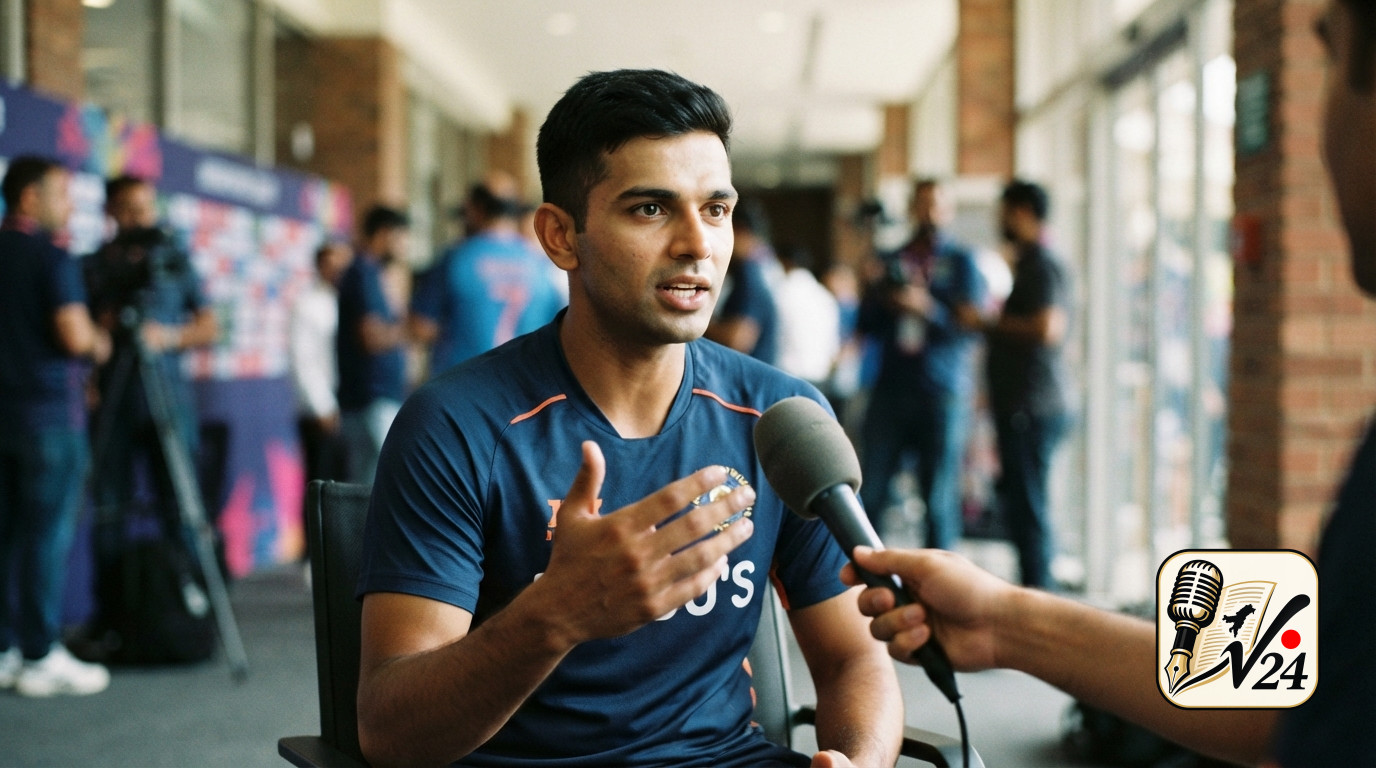
Addressing the media ahead of the series opener, West Indies captain Shai Hope stressed that his team remains wary and deeply respectful of the challenge posed by India on home soil. Hope emphasized that facing India in their home conditions is historically one of the toughest assignments in international cricket, regardless of whether senior Indian players are rested. The West Indian skipper noted that India's domestic ecosystem produces extraordinary depth, meaning any playing eleven fielded by the hosts remains disciplined, skilled, and highly competitive. Hope expressed confidence in his team's preparation but underlined the necessity for precise execution, tactical patience, and relentless focus if the West Indies are to disrupt India's home dominance and secure positive results in the series.
How is the pitch expected to behave according to the official BCCI pitch report?
The official pitch analysis released by the Board of Control for Cricket in India (BCCI) provides valuable insight into the surface characteristics for the 1st ODI. According to the ground management and pitch report details, the track is expected to present a well-balanced contest between bat and ball. Early in the match, the new ball is likely to offer true bounce and subtle lateral movement, giving fast bowlers an opportunity to extract seam movement during the opening powerplay. As the innings progresses and the surface wears under the sun, the pitch is anticipated to settle into a solid batting surface, rewarding batters who play late and line up the line of the ball. In the second half of the match, spin bowlers are expected to gain increasing purchase, with pitch friction allowing for turn and variable bounce, making toss strategy and spin-bowling selections crucial factors for both captains.
Who are the emerging players expected to step up in the absence of senior core stars?
With Jasprit Bumrah and Hardik Pandya sidelined, the spotlight shifts onto India's secondary pace contingent and middle-order all-rounders. Young fast bowlers in the squad are presented with a direct opportunity to take charge of boundary-control overs and powerplay spells. The management is looking for disciplined line-and-length bowling, tactical variation, and composure under pressure. Similarly, seam-bowling all-rounders stepping into Hardik's slot face the dual requirement of providing six to eight economical overs with the ball while contributing fast scoring in the lower-middle order. Success for these replacement players not only strengthens India's immediate chances in the 1st ODI but also reshapes the broader national selection matrix as competition for World Cup squad spots intensifies.
What are the primary tactical priorities for both teams heading into the match?
Tactically, both teams enter the 1st ODI with targeted match plans. For India, the priority lies in controlling the middle overs (overs 11 through 40) with both bat and ball. Batters will focus on building steady partnerships without letting the run rate stagnate, while the bowling unit aims to restrict boundaries through disciplined stump-to-stump lines and effective spin combinations. For the West Indies, key strategic priorities include neutralizing India's spin attack during the middle phases, minimizing top-order collapse risks, and maximizing boundary output during the death overs. Both squads also face tactical decisions regarding dew factors, which could influence whether the captain winning the toss elects to bat first or bowl first under matchday lighting conditions.
Where can cricket followers track official updates and live developments for the series?
Official information, video highlights, pitch condition assessments, and verified news updates regarding the India vs West Indies ODI series are made available through official cricket administrative channels and licensed broadcast partners. The Board of Control for Cricket in India (BCCI) provides official media releases, pitch summaries, and digital video reports via its official website and digital portals. Global tournament context, ranking implications, and press conference transcripts are published by the International Cricket Council (ICC). Live ball-by-ball coverage, detailed statistical breakdowns, and post-match analytical summaries are distributed across authorized sports journalism platforms worldwide.
Sources
More from Sports