
Why is the topic surrounding Mehdi Hasan and the Haaretz report making global headlines?
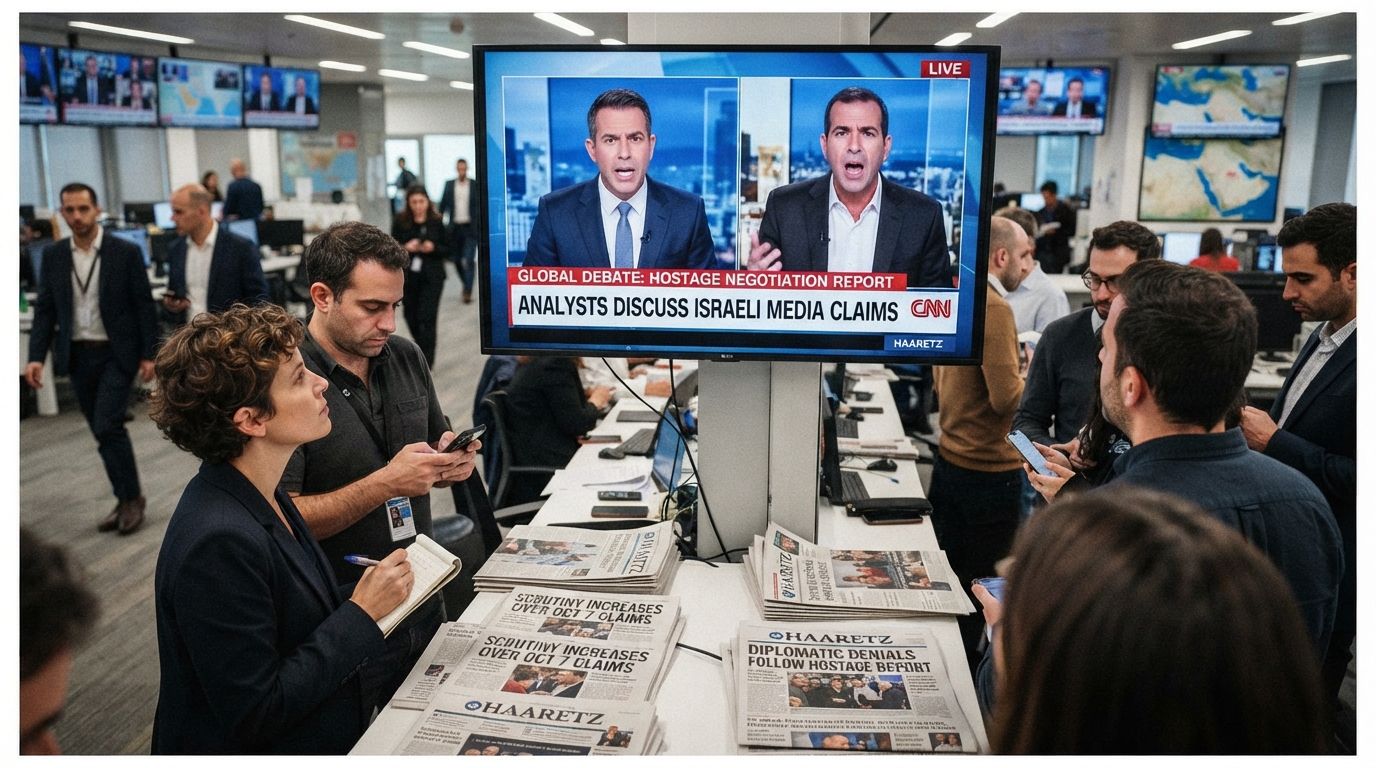
The intersection of media reporting, high-level diplomatic denials, and intense political debate has propelled the name of journalist Mehdi Hasan and the reporting of the Israeli newspaper Haaretz into widespread public discourse. The heightened attention began when Mehdi Hasan flagged a report published by Haaretz which alleged that Hamas had offered to release all captured hostages immediately following the attacks on October 7. This revelation brought renewed scrutiny to the early diplomatic interventions and decision-making processes of international leaders during the opening hours of the conflict. The public interest surrounding this topic grew significantly after U.S. Secretary of State Antony Blinken publicly addressed and rejected allegations that he or the United States government had delayed or rejected an offer from Hamas to release the hostages. The diplomatic fallout expanded further as elected officials in the United States, including Representative Rashida Tlaib, voiced severe criticism of Blinken’s stance and the handling of the diplomatic reporting. Because the debate touches on the initial response to the hostage crisis, the role of international mediators, and government transparency, it has sparked widespread discussion across digital platforms, political commentary channels, and international news outlets.
What did the Haaretz report claim regarding Hamas and the hostages captured on October 7?
According to coverage highlighting the publication, the Israeli news outlet Haaretz published a report asserting that Hamas had made an early offer to release all hostages taken during the October 7 attack. The report alleged that this offer was put forward at the very beginning of the conflict, suggesting that a comprehensive release proposal was available in the immediate aftermath of the initial violence. The details surrounding this claim centered on the assertion that a framework for releasing all captives had been communicated early on. However, the precise mechanics of how the offer was formulated, the full terms attached by Hamas, and the specific diplomatic channels through which it moved were not fully detailed in the summary reports. Despite the lack of complete operational disclosures, the core assertion of the Haaretz piece—that a total release of hostages was proposed on October 7—became a primary point of discussion for political analysts, journalists, and public officials examining the timeline of the crisis.
How did journalist Mehdi Hasan bring renewed attention to the hostage offer disclosures?
Journalist and commentator Mehdi Hasan played a pivotal role in amplifying the Haaretz report by publicly flagging its findings to a broader international audience. By highlighting the Israeli outlet's claims regarding Hamas's October 7 hostage release offer, Hasan brought the story out of niche policy discussions and into mainstream political debate. Hasan’s focus on the report raised critical questions regarding the timeline of international diplomacy and the decisions made by high-ranking officials in the immediate wake of the attacks. His decision to highlight the article encouraged public discourse on whether early diplomatic opportunities to secure the freedom of hostages were properly evaluated or acted upon by key governments, including the United States and its regional partners. This amplification served as a primary catalyst for the subsequent political responses and public statements from top government figures.
How has U.S. Secretary of State Antony Blinken responded to claims that he delayed a hostage agreement?
U.S. Secretary of State Antony Blinken has explicitly and firmly denied reports alleging that he or the State Department delayed an offer from Hamas to free hostages. In public statements addressing the controversy, Blinken rejected the premise of the reports claiming that Qatar or Hamas had presented a viable proposal to immediately release all captives on or around October 7 that was subsequently stalled by American officials. Blinken's denial directly challenges the narrative put forward in the reports highlighted by commentators. The Secretary of State's position maintains that the U.S. administration acted continuously to address the hostage situation and that characterizations suggesting a deliberate delay or dismissal of an immediate release offer do not reflect the reality of the diplomatic efforts undertaken by the United States government during the initial phase of the conflict.
Who has publicly criticized Antony Blinken following his denial of the news report?
Following Secretary of State Antony Blinken's denial of the report, U.S. Representative Rashida Tlaib publicly criticized the top diplomat. Tlaib expressed strong disapproval of Blinken's statements and his rejection of the report claiming that an early hostage release proposal had been presented by Hamas. Tlaib’s vocal reaction highlighted significant political friction within the United States regarding foreign policy decisions and official accountability. Her criticism focused on the handling of early diplomatic signals and questioned the administration's narrative regarding the availability and evaluation of hostage release offers in the days immediately following October 7. This clash between a sitting member of Congress and the Secretary of State highlighted deeper domestic political divisions over the government's approach to the ongoing crisis.
What evidence and context surrounding the hostage negotiation reports remain established or unverified?
Based on the available reporting, several key facts are established, while significant operational details remain unverified or disputed. It is established that Haaretz published a report claiming Hamas offered to free all hostages on October 7, that Mehdi Hasan publicly flagged this report, that Antony Blinken formally denied allegations of delaying any hostage release offer, and that Representative Rashida Tlaib criticized Blinken over his response. However, the supplied reporting does not independently verify the underlying diplomatic communications between international mediators, such as Qatari officials, and the parties involved. The exact language, binding nature, or logistical feasibility of the alleged October 7 offer mentioned in the Haaretz report remain unconfirmed by neutral third-party audits in the public record. Furthermore, official government statements from the United States directly contradict the media reports, leaving the true internal dynamics of the early negotiations subject to opposing claims by public officials and reporting outlets.
What unresolved questions remain regarding the timeline of the October 7 hostage negotiations?
Numerous unresolved questions persist regarding the diplomatic sequence of events immediately following the October 7 attack. A primary unanswered question is whether the proposal described in the Haaretz report constituted a formal, actionable diplomatic offer with agreed-upon terms, or if it represented an informal signal conveyed through intermediary channels without established guarantees. Additionally, the reporting leaves open questions regarding the exact role played by regional mediators, such as Qatar, during the first hours of the hostage crisis, and how rapidly early proposals were transmitted to American and Israeli decision-makers. Because official state accounts and investigative media reports present conflicting narratives regarding whether an immediate release of all hostages was genuinely achievable on October 7, the complete historical timeline remains a subject of ongoing debate.
What may happen next as political figures and commentators debate these disclosures?
As public discussions surrounding the Haaretz report, Mehdi Hasan's commentary, and official denials continue, the issue is likely to prompt ongoing debate within legislative bodies and media circles. Lawmakers interested in foreign policy oversight may seek further clarifications or records regarding the early communications between the U.S. State Department, foreign mediators, and regional authorities during the onset of the hostage crisis. Furthermore, public commentary from journalists and political figures is expected to maintain focus on diplomatic transparency and executive decision-making. As official statements and media investigations continue to be analyzed, the debate over the early handling of the October 7 hostage proposals will remain a significant element in broader conversations regarding crisis management, diplomatic communications, and government accountability.
Sources
More from World