
What occurred during the recent maritime disaster involving an Indonesian passenger vessel in the Java Sea?
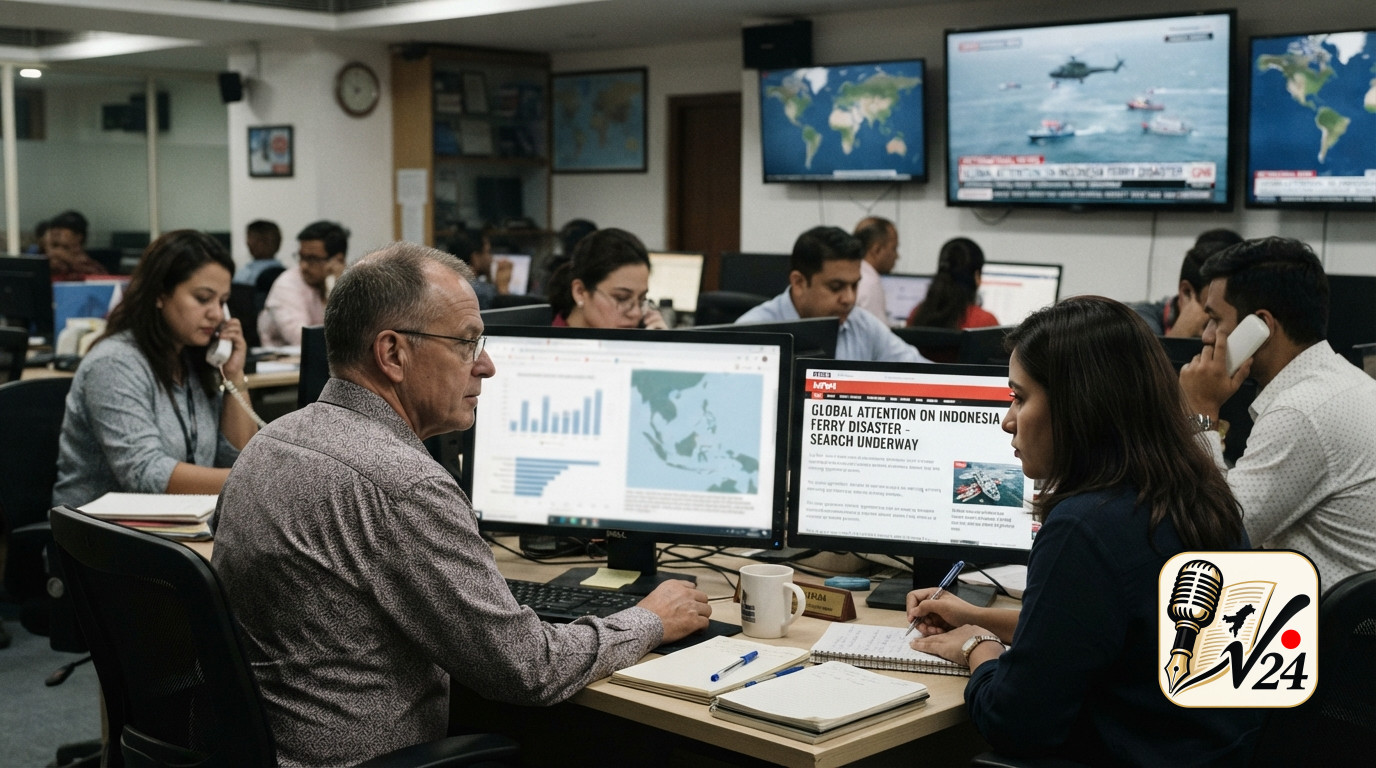
A severe maritime disaster occurred in the Java Sea off the coast of Java, Indonesia, when a passenger vessel carrying 243 individuals capsized and sank. Following the sudden breakdown of the voyage, emergency response agencies were notified and dispatched maritime rescue teams to the location. The ship submerged, forcing passengers and crew into the open water. Out of the 243 people accounted for on board or reported missing in connection with the vessel, rescue teams were able to extract 107 survivors from the sea during the initial phase of the emergency operation. Tragically, authorities confirmed that six individuals lost their lives, with their bodies recovered from the water. A large-scale search operation remains active as rescue personnel attempt to locate 130 passengers who remain unaccounted for in the surrounding marine environment.
Who was aboard the capsized Indonesian ferry and what are the official casualty figures?
The capsized vessel was transporting a total of 243 people at the time of the incident in the Java Sea. Official updates provided by international news outlets and emergency agencies indicate that 107 people were successfully rescued alive by search teams and brought to safety. However, six fatalities have been officially confirmed after rescue crews retrieved their bodies from the water. The remaining 130 passengers and crew members are officially listed as missing. While the overall figure of 243 people on board has been established, detailed demographic information, including the identities, ages, or specific break-down of passengers versus crew members, has not yet been detailed in available official reporting as search operations prioritize finding survivors.
Where and when did the passenger ship capsize, and what are the geographic conditions of the region?
The sinking occurred in the Java Sea, a critical body of water situated off the island of Java in Indonesia. The Java Sea serves as a major maritime corridor within the vast Indonesian archipelago, connecting key coastal urban centers, trade ports, and smaller island communities. Thousands of commuters and local travelers depend daily on inter-island ferry services to cross these waters. While the exact atmospheric conditions at the moment the vessel turned over have not been detailed in official reports, navigating the Java Sea regularly involves coping with localized sea currents, sudden maritime weather disruptions, and heavy maritime traffic. Rescue operations are currently navigating these expansive water conditions to locate survivors spread across the search zone.
How are search and rescue teams conducting operations to locate the missing passengers?
Search and rescue operations were initiated immediately after reports confirmed that the passenger ship had capsized in the Java Sea. First responders and maritime safety units deployed vessels to the coordinates of the disaster, managing to pull 107 survivors out of the water shortly after arriving. In addition to retrieving six deceased individuals, emergency crews have established a wider search grid across the Java Sea to locate the 130 people who are still missing. The operation involves scanning surface waters and coordinating rescue efforts across maritime agencies. Rescuers face significant challenges due to expansive marine surface areas, moving sea currents, and time-sensitive conditions for finding survivors in open waters.
Why is inter-island maritime transportation vital to Indonesia's national infrastructure?
Indonesia is the world's largest archipelagic state, comprised of thousands of individual islands spread over thousands of miles of ocean. Because ground transportation like highways or rail networks cannot connect separate islands, maritime transit via ferries, boats, and passenger ships forms the backbone of the nation's transportation system. Millions of citizens rely on passenger vessels for daily travel, economic commerce, trade, and access to essential services between major islands like Java and surrounding smaller landmasses. Consequently, any major incident involving a passenger ferry in central waters such as the Java Sea highlights the nation's deep reliance on sea transit and brings intense focus onto the safety systems governing inter-island travel.
What evidence and official details have emerged regarding the cause of the ferry capsizing?
At present, official reporting has established the verified numbers regarding survivors, casualties, and missing persons—107 rescued, six dead, and 130 missing out of 243 involved—but official reporting has not established the precise root cause of the capsize. In incidents of this nature, maritime authorities typically investigate potential causes such as sudden adverse weather, rough waves, mechanical failure, structural integrity issues, or potential overloading of passengers and cargo. However, the available reporting from emergency management agencies does not yet confirm whether environmental factors or human and mechanical issues caused the vessel to capsize. Comprehensive technical investigations will be required to establish the facts.
What is the immediate impact of this disaster on the local community and emergency services?
The immediate impact of the sinking is felt most acutely by the survivors, the families of the victims, and the localized emergency response teams in Indonesia. For the 107 survivors rescued from the Java Sea, emergency care and medical assessments are being prioritized following their rescue from the water. Meanwhile, families of the 130 missing individuals remain in severe distress as they await news from the ongoing search and rescue efforts. The disaster has also diverted significant regional emergency resources to the Java Sea, requiring intense coordination among rescue teams, local harbors, and maritime administration officials while safety standards along local ferry routes come under public scrutiny.
What critical questions remain unanswered as the investigation begins?
Several major questions remain unanswered in the immediate aftermath of the vessel capsizing in the Java Sea. The primary unknown is the exact technical or environmental trigger that caused the passenger ship to capsize and submerge. Additionally, official sources have not yet established whether the ship was operating within its authorized passenger capacity, whether proper safety protocols were followed prior to departure, or whether life-saving equipment was fully accessible during the emergency. It also remains unconfirmed how long passengers were stranded in the water before rescue personnel arrived, and whether weather conditions played a direct role in the sinking.
What steps are expected next as search efforts and inquiries continue in Indonesia?
In the coming days, the primary focus of Indonesian emergency agencies will remain centered on the search and rescue operation in the Java Sea to account for the 130 missing individuals. As time progresses, search grids may be expanded or adjusted based on sea drift modeling and weather forecasts. Following the conclusion of active search operations, Indonesian maritime authorities are expected to launch a formal investigation into the disaster. Investigators will likely examine the ship's maintenance records, review passenger manifests, evaluate weather logs, and interview survivors and crew members to determine accountability and prevent similar maritime tragedies in the future.
Sources
More from World