
What recent match result led to Gautam Gambhir's criticism of ODI pitch conditions?
The debate surrounding One Day International pitch conditions intensified after India successfully chased down a formidable target of 406 runs against the West Indies. While the high-scoring outcome served as a dramatic display of batting strength, it immediately drew critical scrutiny from India's head coach, Gautam Gambhir. Following the conclusion of the match, Gambhir expressed deep dissatisfaction with the nature of the surface prepared for the contest. Instead of celebrating the massive total purely as a victory, the former national batsman pointed out that surfaces offering minimal assistance to bowlers diminish the fundamental spirit of competitive cricket. The scale of the run-chase brought national attention to the quality of home pitches and ignited discussions among fans, analysts, and administrators regarding whether modern ODI surfaces are excessively skewed toward run-scoring.
Why did Indian head coach Gautam Gambhir criticize flat ODI pitches after the high-scoring victory?
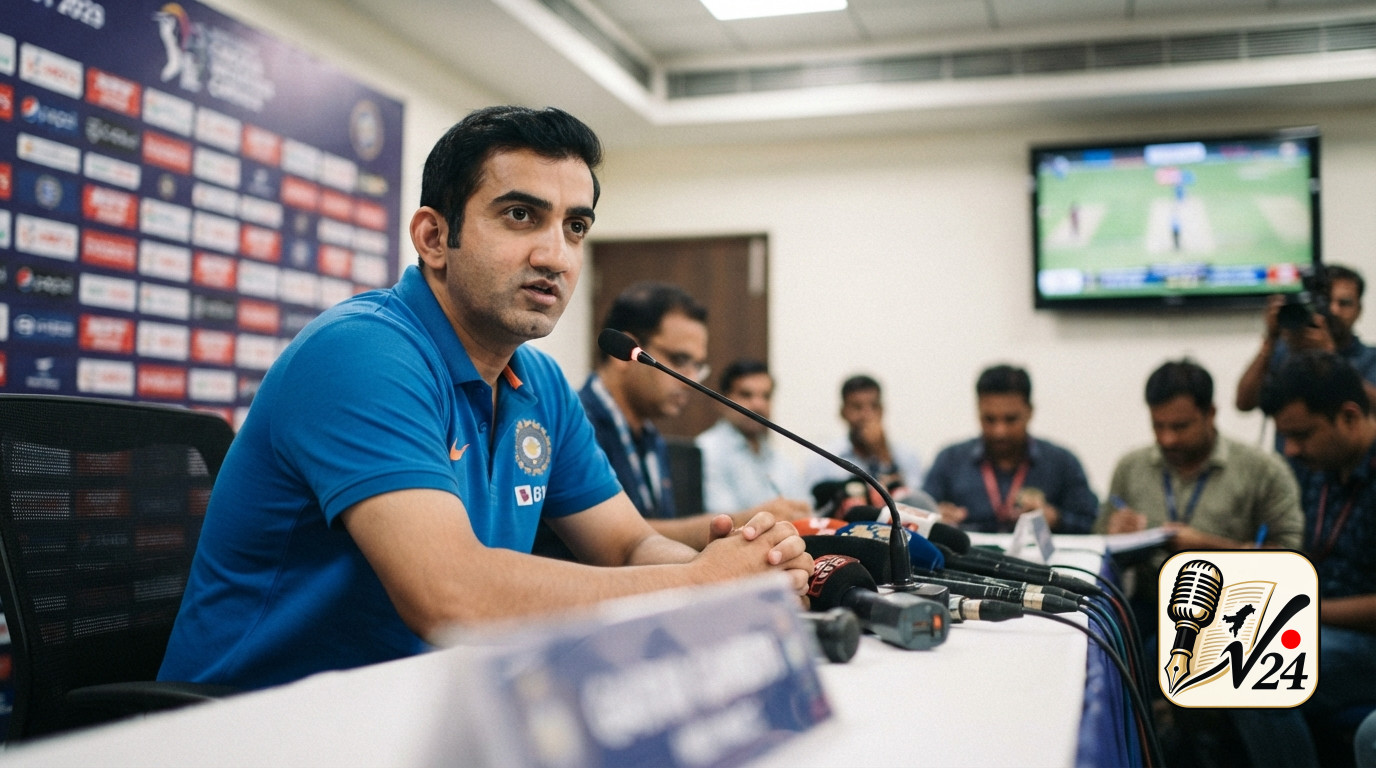
Head coach Gautam Gambhir strongly criticized the pitch conditions, asserting that matches yielding over 400 runs per innings dilute the core challenge of the sport. Expressing his frustration over the lack of assistance for bowlers, Gambhir bluntly remarked that such heavily tilted contests are 'not cricket.' He emphasized the critical need for a fair and balanced contest between bat and ball, arguing that pitches designed as flat 'highways' reduce bowling to a mechanical exercise and rob the game of tactical nuance. According to Gambhir, true cricket standard requires pitches where seamers and spinners have genuine opportunities to take wickets, force mistakes, and exert pressure. By speaking out publicly despite India's victorious outcome, Gambhir highlighted a long-standing concern that over-emphasizing high scores ultimately undermines the skill set required from both batters and bowlers in international fixtures.
How do flat home pitches impact India's long-term preparation for the 2027 World Cup?
The reliance on flat home tracks has raised prominent tactical questions regarding India's long-term preparation for major global tournaments, specifically the 2027 ICC Cricket World Cup. Playing regularly on benign surfaces allows batters to hit freely without facing consistent lateral movement, bounce, or sharp turn. However, cricket analysts warn that such conditions create a false sense of security. In international marquee events hosted across varied conditions globally, pitches often offer early movement, variable seam, or significant deterioration, demanding technical discipline and adaptable middle-order play. If the national side primarily tests itself on predictable home highways, players may struggle to adjust when confronted with bowler-friendly or challenging tracks during high-stakes World Cup encounters. Consequently, experts argue that home series should serve as a testing ground across diverse pitch types rather than simply generating high scorecards.
What role did top performers like Shubman Gill play in India's massive run-chase against West Indies?
The mammoth chase of 406 runs highlighted the talent of India's top order, including key batters like Shubman Gill, who have established themselves as central figures in India's white-ball setup. Chasing a target above 400 requires exceptional composure, precise pace, and high boundary output from the outset. Gill's presence at the crease provided the required stability and aggressive scoring rate needed to keep the target within reach throughout the innings. While top-order batters deserve credit for capitalizing on favorable conditions and maintaining tactical discipline under high pressure, the performance also underscored the growing disparity between batting dominance and bowling effectiveness on modern surfaces. Analysts noted that while Gill and his teammates showcased top-tier execution, the ease of run-scoring further illustrated how forgiving the pitch was for aggressive strokes.
Why is the balance between bat and ball becoming a major debate in modern One Day Internationals?
The equilibrium between bat and ball in One Day Internationals has become a central talking point across the global cricket community due to shifting regulations, modern bat technology, and pitch preparation strategies. Over recent years, ODI cricket has increasingly leaned toward favoring batters, resulting in higher match totals, frequent boundary hits, and inflated individual scores. While high scoring is often viewed by administrators as entertaining for broad television audiences, purists and former players worry that it trivialize the art of bowling. When pitches offer no seam movement, swing, or spin, bowling strategy often degrades into damage limitation rather than active wicket-taking. The reaction from team management following the West Indies match underlines a growing belief that unless pitch curators deliberately preserve lateral movement and turn, ODI cricket risks losing its competitive tension and strategic depth.
Where do cricket analysts see potential challenges for bowlers on flat highway tracks?
Cricket experts point out that flat highway tracks leave bowlers with virtually no operational margin for error, significantly altering standard match dynamics. On such pitches, traditional bowling weapons like good-length deliveries, standard out-swing, or conventional stock spin become easily predictable and simple for batters to punish. Bowlers are frequently forced to abandon tactical plans aimed at working out a batter's technical weaknesses, turning instead to repetitive defensive tactics such as wide yorkers, slow bouncers, and pace variations. This environment not only demoralizes fast bowlers and spinners but also impedes the development of young bowling talent who need realistic match situations to build tactical skill. Furthermore, intense run-chases on flat surfaces place immense physical and mental strain on bowling units without offering equal rewards for disciplined spells.
What steps are cricket experts suggesting to ensure better pitch parity moving forward?
To restore fairness and technical rigor to One Day Internationals, cricket analysts and coaching staff are urging venue curators and governing boards to adopt more holistic pitch preparation guidelines. Suggestions include leaving slightly more grass cover to assist fast bowlers early in the match, using soil compositions that encourage natural deterioration for spinners later in the day, and avoiding over-rolled surfaces that flatten out entirely. By preparing tracks that offer something for every discipline, teams will be forced to employ varied selection strategies and display adaptable batting techniques. Implementing these measures in upcoming bilateral series is seen as a crucial step in ensuring that international teams, including India, remain well-rounded, resilient, and fully prepared for unpredictable conditions in upcoming ICC events.
Sources
More from Sports