
Why are the 2026 Rajasthan civic body election results being viewed as a significant mid-term verdict?
The 2026 local body election results in Rajasthan carry substantial political weight because they are widely interpreted as a direct mid-term evaluation of the ruling Bharatiya Janata Party (BJP) state government. Local body elections typically serve as an immediate barometer of public sentiment regarding governance, urban administration, policy execution, and local development projects implemented by the state leadership. For an incumbent state government, municipal and local civic polls offer an early indication of whether voter satisfaction remains intact after taking office or if public discontent is emerging at the grassroots level. Simultaneously, these civic election results act as a critical measuring stick for the principal opposition, the Indian National Congress. Because local body contests depend heavily on door-to-door campaigning, ward-level organization, and localized voter mobilization, the outcomes reflect the structural strength and campaign effectiveness of both primary political outfits. Observers and political analysts view this vote count not merely as a contest for municipal seats, but as a broader indicator of political momentum within Rajasthan halfway through the government's current governance cycle.
What are the key early trends and counting schedules reported for the Bassi Municipality and broader local body polls?
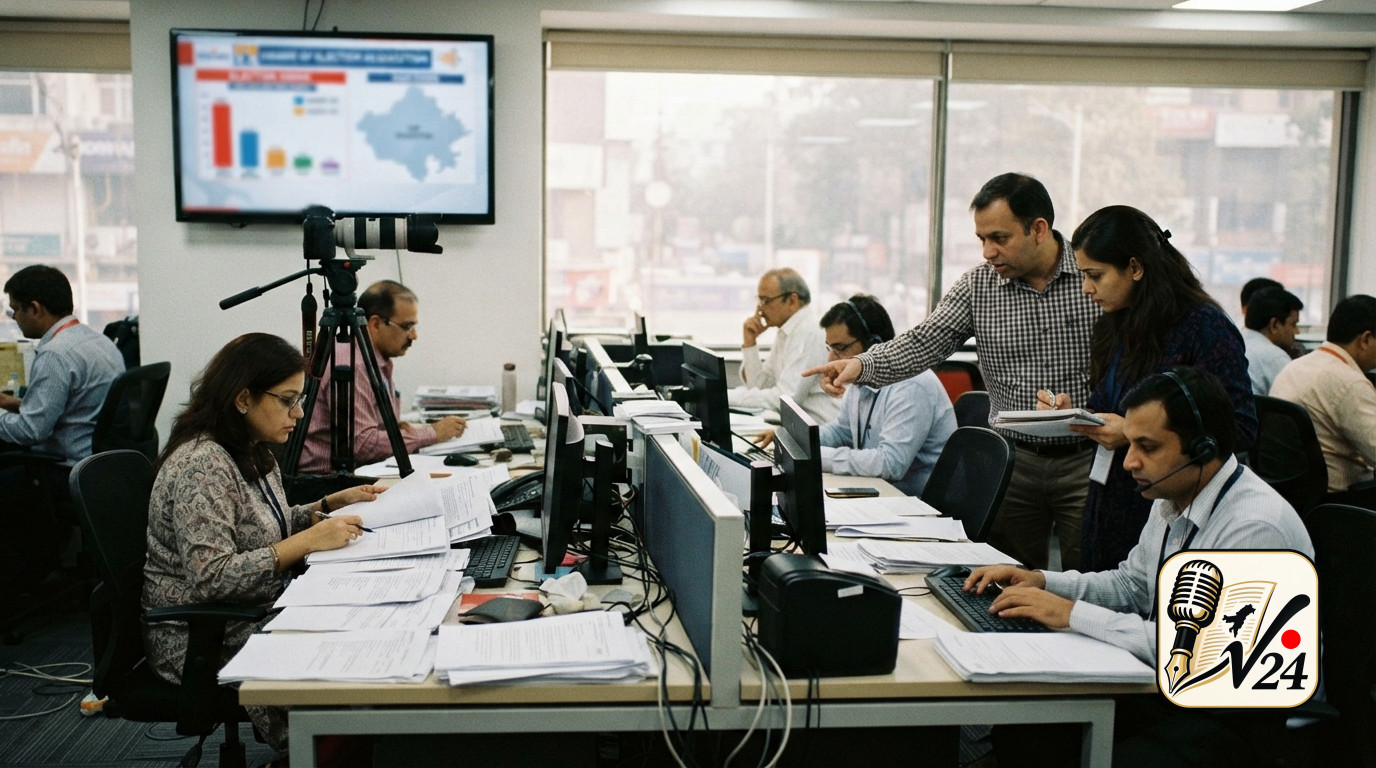
According to initial reports on the counting process for the 2026 local body elections in Rajasthan, vote counting officially commenced at 8:00 AM across designated counting centers, including those overseeing the Bassi Municipality election results. Official channels and live election updates began tracking the tally immediately following the opening of the ballot boxes and electronic voting tabulation processes. In the initial rounds of counting, very early trends indicated that the Bharatiya Janata Party (BJP) established an early lead ahead of the Indian National Congress across initial civic poll tallies. In competitive municipal areas such as Bassi, live coverage emphasized the step-by-step progress of vote counting as officials processed incoming ward data. While these early trends offer an initial snapshot of candidate performance, political observers emphasize that initial leads can fluctuate significantly as progressive rounds of voting tallies are finalized across different municipal wards.
Who faces key political tests in these local body elections?
The 2026 local body polls present a high-stakes scenario for key political figures across Rajasthan's political landscape. Most notably, news coverage frames the elections as a major leadership challenge for Rajasthan Pradesh Congress Committee chief Govind Singh Dotasra. Termed as Dotasra's 'third test,' these civic elections measure the opposition leader's ability to consolidate party cadres, navigate intra-party dynamics, and deliver competitive outcomes against the ruling party in grassroots municipal contests. On the other side of the aisle, the elections present a direct test for the ruling BJP state leadership and local administration officials. Victory in these civic elections would validate the incumbent government's local policy initiatives and maintain political dominance across urban and semi-urban centers. Conversely, any unexpected setbacks in key municipal bodies could expose vulnerabilities in local administration and provide political leverage to the opposition ahead of future electoral cycles.
How do early leads in the local body elections reflect the current political alignment between the BJP and Congress?
The early counting trends showing the BJP maintaining early leads over Congress highlight the ongoing competitive rivalry between Rajasthan's two primary political parties. Local body elections are fought on a combination of broader state-level political narratives and micro-local issues such as sanitation, municipal infrastructure, local roads, water supply, and civic services. The early edge secured by the BJP indicates strong initial performance in early-counted wards, showcasing effective candidate placement and voter turnout execution in those specific areas. However, the performance of Congress in matching or challenging these leads across various municipal wards demonstrates the competitive nature of civic elections in the state. Because municipal wards vary widely in demographic composition and hyper-local priorities, the broader political alignment reflects how effectively both parties were able to translate party organization into voter mobilization at the polling station level.
Where are the primary focal points of the vote counting in this round of local elections?
The primary focal points of the vote counting include several local bodies spread across Rajasthan, with specific municipal bodies like the Bassi Municipality receiving focused live coverage. Municipal elections across the state encompass a diverse array of urban local bodies, where local councilors and municipal leaders are chosen to manage town and city civic affairs. Counting centers established in Bassi and other civic centers operate under tight administrative supervision to process municipal ward results. Reports indicate that local authorities structured the counting arrangements to ensure systematic disclosure of ward-wise data, making municipal headquarters and district counting venues the center of political attention for candidates, party supporters, and media personnel throughout the day.
When did vote counting commence and what is the expected timeline for finalized local body outcomes?
The scheduled counting of votes for the Bassi Municipality and other local bodies in Rajasthan officially began at 8:00 AM on the designated counting day. The early hours of the schedule were dedicated to setting up secured counting halls, verifying ballot boxes or voting equipment, and completing initial procedural formalities under the oversight of election officers. Following the 8:00 AM start, early trends began surfacing within the first few hours of processing. The timeline for finalized outcomes depends on the number of municipal wards and rounds of counting required for each local body. As official tabulations conclude ward by ward, returning officers issue formal declarations of results, establishing the final composition of local municipal boards and councils.
What unanswered questions remain as counting proceeds across Rajasthan's civic polls?
As the vote counting process progresses, several crucial questions remain unresolved by the available early reporting. While initial trends showed early leads for the BJP over Congress, the finalized margins of victory across all contested municipal wards have not yet been fully established in the preliminary reports. It remains to be seen whether early leads translate into outright majorities across key civic bodies or if close contests result in hung municipal councils requiring post-election alliances. Additionally, the specific final tally for individual municipal seats in Bassi Municipality and other participating local bodies remains to be fully detailed as counting rounds continue. The ultimate impact of local independent candidates and smaller political groups on the final board formations also remains an open question until official declarations are completed by election authorities.
What next steps are anticipated once the official results for the 2026 civic elections are declared?
Once election officials complete the counting process and issue formal declarations for every municipal ward, attention will immediately shift to the political implications and board formation processes across Rajasthan's local bodies. For winning candidates, the immediate next step involves gazette notifications and the formal swearing-in procedures required to take office as municipal representatives. In political terms, both the BJP and Congress will conduct internal reviews of the results. For the ruling BJP, the final outcomes will be analyzed to assess public satisfaction with the state government's mid-term performance. For Congress leadership, particularly under state chief Govind Singh Dotasra, the post-election phase will involve evaluating organizational strengths and addressing areas where candidate performance fell short. The results will ultimately set the political tone for upcoming state-level strategy and governance assessments in Rajasthan.
Sources
More from National