
What is the background behind the upcoming official language initiatives and Hindi Diwas 2026 observances?
The annual focus on official language policies and Hindi Diwas brings together public officials, literary figures, and administrative institutions to evaluate the progress and direction of Hindi across governance and society. Ahead of Hindi Diwas 2026, discussions surrounding the implementation of Rajbhasha guidelines have intensified, driven by both high-level conferences and intellectual debates regarding how the language should adapt to contemporary needs. Central to these observances is the All India Official Language Conference, known as the Akhil Bharatiya Rajbhasha Sammelan, which serves as a national platform for evaluating administrative language usage, public communication policies, and regional engagement strategies. These gatherings provide a formal structure through which government departments and municipal bodies review their compliance with official language directives. At the same time, national observances prompt wider public commentary regarding the sociocultural role of Hindi in a multilingual country. The intersection of administrative organization and broad cultural commentary shapes how Hindi Diwas is recognized, transforming routine official commemorations into active dialogues on language policy, education, and representation.
How are municipal authorities preparing for major official language events like the Rajbhasha Sammelan in Vashi?
Civic infrastructure and local administrative planning play a pivotal role in hosting national-level language events. In preparation for the upcoming Rajbhasha Sammelan held in Vashi, the Navi Mumbai Municipal Corporation has undertaken comprehensive reviews of administrative arrangements to ensure smooth execution. Local authorities have conducted planning assessments covering civic services, venue readiness, transportation management, and public safety. Managing large-scale events like the Rajbhasha Sammelan requires coordination across multiple municipal departments, as delegation visits include officials, scholars, and public figures from across the country. The municipal review in Vashi highlights how local civic bodies bear the responsibility of facilitating national language conventions, aligning municipal operations with broader official language initiatives. By evaluating logistical requirements, traffic management protocols, and venue infrastructure, civic administrators aim to provide an effective operational foundation for discussions centered on Rajbhasha implementation.
Who are the prominent figures participating in the Sixth All India Official Language Conference?
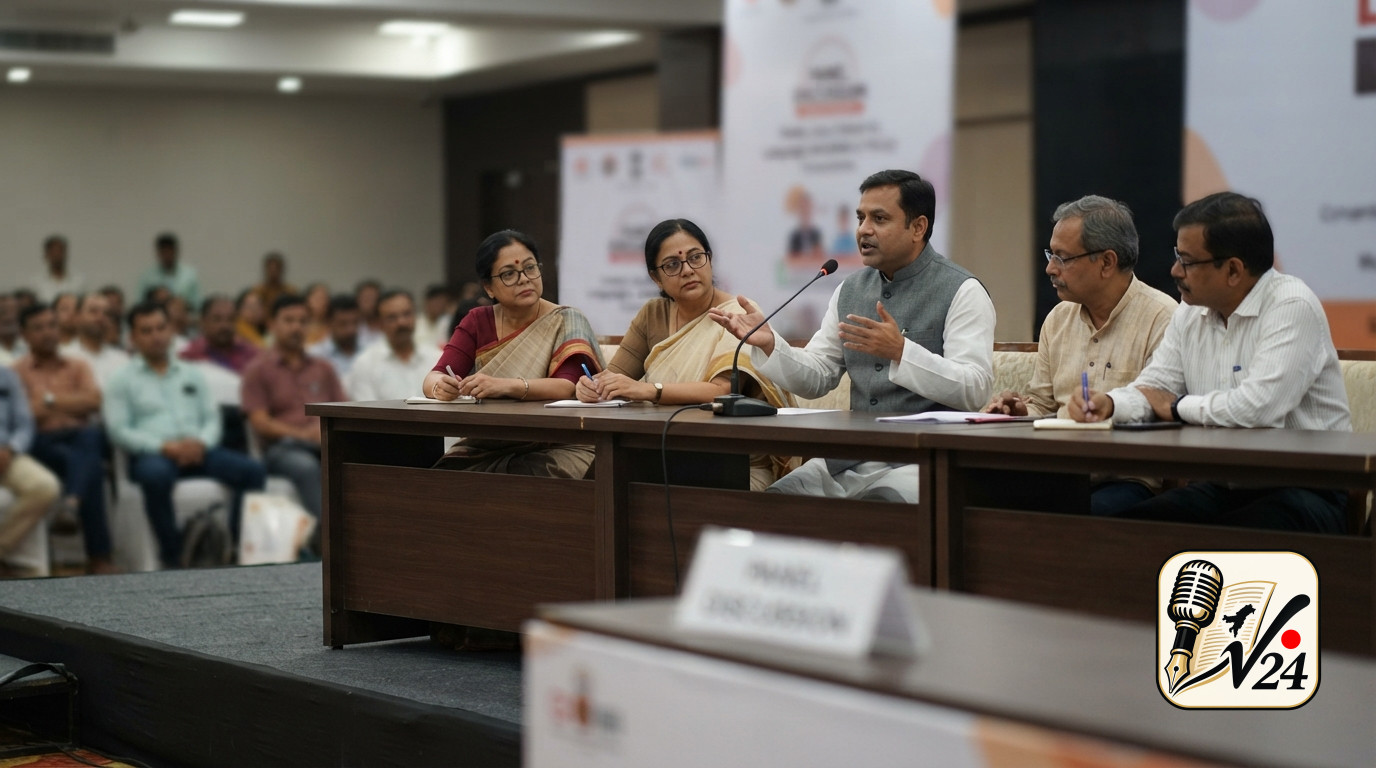
The Sixth All India Official Language Conference features contributions from prominent cultural commentators, creative writers, and public figures alongside government representatives. Notable lyricist and writer Manoj Muntashir is among the key participants scheduled to join the conference proceedings. The inclusion of popular creative voices alongside administrative delegates reflects an effort to broaden the scope of official language discussions beyond technical governance. Public figures like Muntashir bring perspective from the entertainment and literary sectors, where Hindi functions as a primary medium for popular communication and artistic expression. By bringing together policy makers, municipal reviewers, and prominent creative personalities, the conference aims to bridge the gap between official administrative terminology and the living, spoken form of the language used by millions across the nation.
What does the debate regarding decolonising the Hindi language entail?
Beyond formal event preparations, intellectual discussions around Hindi Diwas frequently focus on the historical development and future orientation of the language. A key topic of contemporary commentary involves the concept of decolonising Hindi by embracing its varied internal voices, regional dialects, and historical variants. According to analysis published in media commentaries like The Indian Express, rigid standardization of Hindi can sometimes alienate regional speech patterns and traditional dialects that have historically enriched the language. The call to decolonise Hindi argues that over-reliance on heavily formalized or bureaucratic forms of the language distances it from everyday speakers. Proponents of this view suggest that true linguistic vitality comes from accepting local nuances, regional vocabularies, and spoken registers from diverse geographic areas, rather than imposing a single monolithic standard.
Why is the inclusion of regional dialects and varied voices considered essential for language growth?
Linguistic experts and commentators emphasize that a language grows through inclusion rather than strict exclusion. In the context of Hindi, the debate over embracing diverse voices highlights the relationship between standard register Hindi and its numerous regional counterparts, such as Awadhi, Bhojpuri, Braj Bhasha, and Maithili. Advocates for language decolonization argue that recognizing these distinct regional roots strengthens the overall reach and cultural depth of Hindi. When official frameworks accommodate regional variations, public engagement with official language policies increases, reducing friction between regional identity and national language initiatives. By allowing space for diverse colloquial expressions and regional traditions within public discourse, the language becomes more adaptable, inclusive, and reflective of India's complex linguistic landscape.
Where do administrative organization and cultural commentary intersect in official language policy?
The dialogue surrounding official language policies operates across two main tracks: operational administrative execution and broad socio-cultural discourse. On the administrative side, actions such as the Navi Mumbai Municipal Corporation's logistical preparation in Vashi demonstrate the practical effort required to run national conferences. Similarly, official bodies track compliance metrics, translation services, and administrative usage. On the cultural side, commentators and participating artists at events like the sixth All India Official Language Conference analyze how language policy interacts with public identity, literature, and media. The intersection occurs at platforms like the Rajbhasha Sammelan, where administrative goals are discussed alongside artistic perspectives, allowing policy makers to consider how formal mandates affect real-world communication across diverse communities.
What unanswered questions remain regarding official language implementation and linguistic diversity?
Despite ongoing preparation and dialogue surrounding Hindi Diwas 2026 and related conferences, several key questions remain unresolved. The available reporting does not specify how recommendations from creative figures or columnists advocating for linguistic decolonization will be integrated into formal government policy. It remains uncertain to what extent administrative bodies like the Rajbhasha departments will adjust official vocabulary standards to accommodate regional variations. Additionally, while local bodies like the Navi Mumbai Municipal Corporation manage immediate event logistics, long-term frameworks for balancing standard Hindi promotion with local regional languages across different states continue to be a subject of ongoing debate among policy makers, educators, and language scholars.
How might future language conferences shape the trajectory of Hindi in public life?
As events like the Sixth All India Official Language Conference proceed and municipal preparations conclude in venues like Vashi, the outcomes of these deliberations are expected to influence future language directives. Moving toward Hindi Diwas 2026, the ongoing synthesis of administrative planning, creative participation, and critical commentary will likely dictate how official language initiatives evolve. If public calls to embrace internal diversity gain traction within official forums, future policy guidance may favor more flexible, accessible forms of Hindi over strictly formal registers. Observers will continue monitoring how national conferences translate high-level discussions into practical measures across public institutions, educational settings, and civic administration.
Sources
More from Culture