
What is the recent announcement regarding the Dearness Allowance hike in Sikkim?
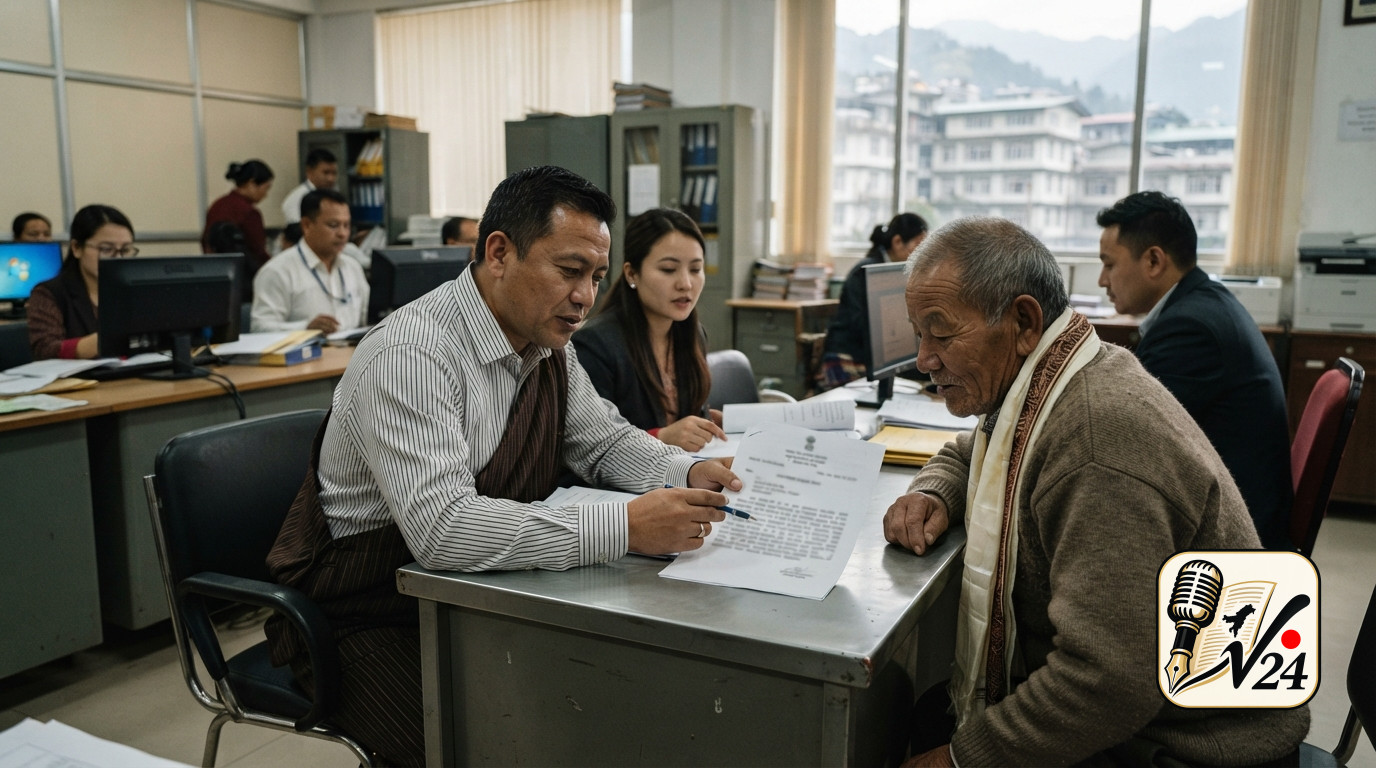
The Sikkim state government has officially announced a major update to its compensation structure for state government workforce and retired personnel by hiking the Dearness Allowance (DA) and Dearness Relief (DR). Under the newly issued decision, the DA rate for active state government employees and the DR rate for state pensioners have been elevated to 60 percent. This administrative decision brings notable financial revisions to the monthly compensation packages of public servants across the state. Dearness Allowance is an essential variable component of public sector remuneration in India, structured primarily to hedge the real income of government personnel against the eroding effects of price inflation. Simultaneously, Dearness Relief serves an identical function for retired public servants by adjusting their monthly pension payments in accordance with shifting economic indices. By raising the benchmark DA and DR allocations to 60 percent, the state leadership aims to deliver substantial relief to thousands of households that rely on government payrolls and pension distributions for their livelihoods. The announcement has been greeted as a major festive development for state government workers, offering enhanced financial stability at a critical juncture. News of the upward revision was confirmed across state administration channels and regional news outlets, highlighting the government's commitment to maintaining parity between public sector compensation and prevailing cost-of-living metrics. The move aligns with broader administrative policies across Indian states where periodic revisions to DA and DR are enacted to reflect official inflationary indicators and preserve purchasing power.
Who will benefit from the updated Dearness Allowance and Dearness Relief rates?
The approved revision in Dearness Allowance and Dearness Relief applies broadly across the public administration ecosystem of Sikkim, directly benefiting two distinct categories of recipients: regular state government employees and state government pensioners. For active employees, the increase in Dearness Allowance will directly modify the monthly gross salary calculations. Public sector workers serving across various government departments, administrative wings, civil services, state education establishments, and operational departments under the executive jurisdiction of the Sikkim government will see the revised 60 percent rate reflected in their monthly earnings. Because DA calculations are structured as an explicit percentage of an employee's basic pay, the net quantum of monthly relief will scale proportionally according to the pay matrix level and basic salary grade of each individual worker. For retired personnel, the corresponding adjustment in Dearness Relief ensures that former civil servants, state retirees, and family pension recipients receive enhanced financial support. Dearness Relief is calculated as a percentage of the basic pension figure, ensuring that retired state servants, who often rely on fixed income structures, receive identical percentage-based upward revisions as active administrative personnel. The policy ensures uniform relief across both active duty workers and senior citizen retirees enrolled in the state's pension system, shielding senior citizens from rising healthcare and daily living expenses.
When does the new 60 percent DA and DR rate take effect for Sikkim employees?
According to reporting on the official government notification, the revised Dearness Allowance and Dearness Relief rates of 60 percent are designated to take effect from January 2026. This effective timeline establishes the statutory date from which state payroll departments and treasury offices will benchmark the updated calculation formulas. In standard public sector administrative procedures, effective dates determine the chronological baseline for payroll processing and retrospective calculations. When a DA or DR enhancement is scheduled with a specific effective start date, state accounts offices modify their automated salary and pension disbursal systems to reflect the updated percentages. If administrative or operational disbursements occur after the stated effective date, standard state procedures dictate that applicable arrears must be calculated and credited to the respective bank accounts of employees and pensioners. While available reporting confirms the January 2026 effective timeframe for the 60 percent rate, explicit operational directives regarding whether the revised payouts will be delivered in single payroll cycles or distributed alongside specific arrear installments remain governed by detailed circulars issued by the state's finance department. State employees and pension funds track these implementation timelines closely to project their household budgeting and financial planning.
How do Dearness Allowance and Dearness Relief function for state government employees and pensioners?
Dearness Allowance (DA) and Dearness Relief (DR) are standardized cost-of-living adjustment mechanisms utilized across Indian central and state government administrative frameworks. They are designed as dynamic components of compensation that fluctuate based on broader economic trends, particularly consumer price movements and inflation rates. For serving employees, total remuneration typically consists of basic pay, dearness allowance, house rent allowance, and other official perks. Basic pay remains fixed within established pay scale bands until regular annual increments or comprehensive pay commission revisions occur. However, because prices for essential commodities, transportation, housing, and food fluctuate continuously, static basic salaries can lead to a decline in real purchasing power. To counteract this, state governments periodically declare percentage-based DA revisions. When the DA rate is set at 60 percent, an employee receives an additional monthly sum equivalent to 60 percent of their established basic pay amount. Dearness Relief functions identically for retired state personnel. Pensioners receive a basic pension amount calculated upon their retirement based on their length of service and final pay drawn. To protect pensioners against inflation during retirement, the government applies the DR percentage directly to the basic pension amount. Consequently, an increase in DR to 60 percent guarantees that a pensioner whose basic monthly pension is fixed will receive an additional 60 percent of that base figure as financial relief, ensuring that non-working senior citizens maintain reasonable financial stability relative to prevailing economic conditions.
Why is this Dearness Allowance increase significant for the regional economy and state workforce?
The elevation of the Dearness Allowance and Dearness Relief rate to 60 percent holds substantial fiscal and social significance for Sikkim's state economy and its workforce. In many states across Northeast India, public sector employment represents a primary anchor of stable formal employment, and state government expenditures significantly influence broader commercial activity. Firstly, an upward revision in public sector compensation directly enhances disposable income across thousands of households. When state workers and retirees receive higher monthly payouts, household spending on consumer goods, local retail, health services, educational expenses, and regional travel increases. This injection of liquidity provides a positive secondary stimulus to local trade sectors, small businesses, and service providers throughout urban and rural areas in Sikkim. Secondly, the timing of such financial announcements frequently aligns with regional festive periods and seasonal planning, providing immediate economic confidence to public sector families. Navigating price surges in market commodities becomes significantly less burdensome for households when official compensation expands proportionally. Furthermore, maintaining fair and updated DA levels reinforces morale within the state bureaucracy, encouraging efficiency and job satisfaction among public administration staff responsible for executing state policies and public service delivery.
What details regarding payment schedules, arrears, and budget outlays remain unconfirmed?
While the core announcement clearly establishes that the Sikkim state government has approved the DA and DR hike to 60 percent effective from January 2026, certain specific financial and administrative particulars are not fully detailed in the preliminary public summary reports. Specifically, the supplied news reporting does not state the exact total financial outlay or budgetary burden that this 60 percent rate adjustment will impose on the Sikkim state treasury over the fiscal year. Public administration decisions involving state-wide DA revisions typically require financial allocation adjustments within state budgets, but exact figures regarding the total annual expenditure required for this hike were not specified in initial summaries. Additionally, detailed guidelines regarding the exact schedule of arrear disbursements—if any accumulate between the effective implementation date and the operational payroll payout date—remain subject to formal finance department circulars. Reporting has verified the headline percentage and the core beneficiary group, but operational minutiae such as credit dates, fund distribution split between cash and provident fund deposits, or department-specific rollouts depend on administrative notifications issued through official government channels.
How does Sikkim's DA hike reflect broader financial relief measures across Northeast India?
The decision by the Sikkim government to hike Dearness Allowance and Dearness Relief to 60 percent reflects a broader trend among state governments in Northeast India seeking to support public employees amidst evolving macroeconomic conditions. Across the northeastern region, state administrations regularly review compensation structures to maintain parity with cost-of-living indexes and mirror federal pay standards where feasible. State governments in the Northeast face unique logistical and geographic considerations that can influence regional inflation rates, from transport overheads for essential goods to terrain-specific infrastructure costs. Providing adequate DA and DR adjustments ensures that public personnel stationed across remote, mountainous, or urban corridors are adequately cushioned against local price fluctuations. By enacting this substantial 60 percent revision, Sikkim demonstrates a proactive approach to employee welfare within the regional public administrative landscape, reinforcing standard governance practices that prioritize fiscal support for state workers and retired public servants.
Sources
More from National