
What happened during the IndiGo flight operating from Guwahati to Bengaluru?
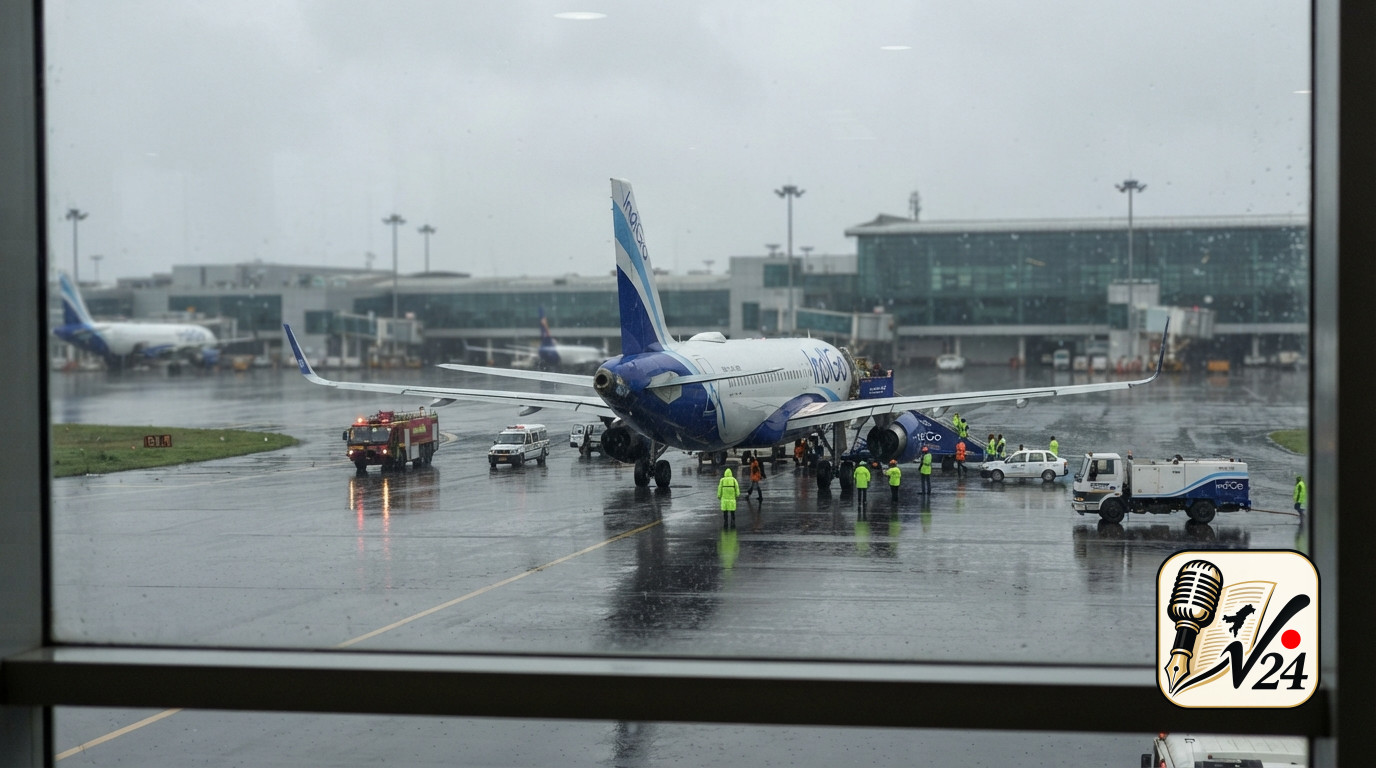
An IndiGo passenger flight traveling from Guwahati in Assam to Bengaluru in Karnataka experienced an aviation safety incident during its landing phase at Kempegowda International Airport in Bengaluru. While making contact with the runway, the aircraft suffered a tail strike, which is officially described in aviation terms as abnormal runway contact. A tail strike occurs when the lower rear section of an aircraft's fuselage comes into physical contact with the runway surface during either takeoff or landing maneuvers. In this particular instance, the aircraft was making its final approach and touchdown at the Bengaluru destination after completing its scheduled flight path from Guwahati. Reports from national news outlets confirmed that the aircraft landed on the runway, but the contact was characterized by abnormal pitch or pitch angle adjustments upon touchdown, leading to the rear portion scraping or contacting the paved surface. Following the landing, the crew completed the rollout and safely brought the aircraft to a halt, after which official clarification was issued regarding the operational circumstances of the flight.
Why did IndiGo attribute the landing incident to weather conditions in Bengaluru?
Following the landing incident at Bengaluru airport, IndiGo released an official statement clarifying the factors that contributed to the abnormal runway contact. According to the airline, bad weather and challenging atmospheric conditions over Bengaluru played a primary role in disturbing the aircraft's final approach and touchdown trajectory. Sudden changes in wind speed, wind direction, updrafts, or localized downdrafts—frequently associated with inclement weather and storm activity—can cause unstable approaches or sudden pitch shifts just prior to touchdown. When an aircraft encounters sudden meteorological shifts near the ground, pilots must make immediate control adjustments to stabilize the descent rate and attitude. The airline emphasized that adverse weather made the landing particularly difficult, ultimately leading to the tail strike as the aircraft made contact with the runway surface. While the exact wind measurements and specific storm intensity details during the moment of impact remain subject to internal and regulatory safety reviews, the carrier explicitly pointed to localized weather phenomena as the main contributing driver of the incident.
What specific aircraft model was involved in the Bengaluru airport tail strike?
The aircraft involved in the Guwahati-to-Bengaluru incident was an Airbus A321, a stretched variant of the popular A320 family operated widely by IndiGo for domestic and short-haul international routes. The Airbus A321 features a significantly longer fuselage compared to standard narrow-body aircraft like the A320 or A319. Because of its extended length, the tail section of an A321 sits relatively closer to the ground during high-angle pitch maneuvers, making it structurally more susceptible to tail strikes if the pitch attitude during flare or touchdown exceeds specified degrees, or if sudden environmental forces like wind shear force the nose upward unexpectedly. Industry reports highlighting the incident noted that this event added to historical observations regarding tail strike dynamics on the A321 platform within commercial operations. Modern flight control software and pilot training standards include specific protocols to prevent excessive rotation angles, but adverse weather and violent atmospheric disturbance can test those operational margins during critical landing phases.
How did IndiGo clarify the operational status and safety protocols following the incident?
In response to reports of abnormal runway contact, IndiGo issued official communications detailing the immediate actions taken by the crew and operations team. The airline clarified that despite the tail strike, the aircraft was landed safely at Bengaluru airport, and the primary objective remained ensuring the complete safety of all passengers and crew members on board. Standard aviation safety protocols mandate that whenever an aircraft experiences abnormal runway contact or a suspected tail strike, it must be immediately withdrawn from active service and grounded for comprehensive engineering inspections. Technicians, structural engineers, and safety personnel perform thorough examinations of the aft fuselage underside, structural pressure bulkheads, skin panels, and tail cone components to evaluate the degree of physical impact and determine necessary structural repairs before the aircraft can be cleared for future commercial flights. IndiGo emphasized its adherence to safety guidelines and regulatory mandates in addressing the operational impact of the incident.
Who was affected by the incident and what was the condition of the passengers?
The flight was carrying passengers traveling on the direct domestic corridor connecting Guwahati, the primary urban and transit hub in Assam and Northeast India, to Bengaluru, the capital of Karnataka and a prominent technology and commercial center. According to reports from official news channels and airline communications, no injuries were reported among the passengers or crew members as a result of the tail strike. Passengers experienced the abnormal touchdown as the flight completed its arrival sequence, but the aircraft remained controllable throughout the landing roll and taxied off the active runway. The successful post-strike management ensured that passengers were able to disembark through standard terminal procedures without emergency evacuation protocols being triggered, allowing travelers to proceed safely into the Bengaluru airport arrival areas while maintenance crews secured the aircraft for assessment.
Where does this incident stand in relation to aviation safety and weather monitoring?
The incident occurred at Kempegowda International Airport in Bengaluru, an aviation hub that processes hundreds of commercial flights daily and frequently experiences seasonal weather shifts, convective storm activity, and varying wind patterns. Aviation safety procedures require weather monitoring systems at major airports to continuously assess wind shear, visibility, cloud ceilings, and precipitation to warn incoming flights of potential hazards. When severe localized weather develops unexpectedly, pilots on final approach face rapid control challenges during the flare maneuver—the final transition from descent to touchdown. The occurrence underscores the critical interplay between prevailing local weather conditions, airfield infrastructure, and flight handling practices during landing maneuvers on long-fuselage commercial airliners.
When do aviation authorities step in to investigate abnormal runway contact events?
When a tail strike or abnormal runway contact occurs on a commercial flight, standard regulatory frameworks in India mandate immediate reporting to aviation regulators, including the Directorate General of Civil Aviation (DGCA). Regulatory bodies and internal airline safety committees initiate factual reviews following such incidents to analyze flight data recorder logs, cockpit voice records, weather reports, and physical damage assessments. These formal reviews seek to reconstruct the exact sequence of events, verify whether all landing parameters were within standard operating limits, evaluate pilot response to sudden environmental disturbances, and determine if additional technical maintenance or operational guidelines are required. The process ensures that structural integrity issues are fully rectified and lessons from weather-induced incidents are integrated into ongoing flight operations and crew training routines.
Sources
More from National