
What occurred between the Indian Navy vessel and the Pakistani naval ship in international waters?
A significant maritime encounter took place in international waters when a Pakistani naval ship collided with an Indian Navy unit. According to reports published by major news outlets including The Times of India, NDTV, and The Hindu, the interaction involved operating units from both navies navigating in proximity outside sovereign territorial waters. While vessels routinely monitor and encounter each other in shared international maritime corridors, this specific encounter escalated into a physical collision between the warships. Following the impact, news reports confirmed that the event immediately drew the attention of high-level defense and diplomatic authorities in India. The Ministry of External Affairs was briefed on the circumstances surrounding the movement of both vessels prior to the contact. The collision represents a notable maritime incident between the two neighboring nations in open international sea lanes, highlighting ongoing tensions and operational friction along critical regional waterways.
Where did the collision between the naval vessels take place?
According to initial reporting and official document references cited by media outlets, the collision occurred in international waters, with sources such as The Hindu indicating the incident unfolded in the Arabian Sea. International waters represent maritime regions beyond the territorial sea boundary of coastal states, where military and civilian vessels from all nations possess rights under international maritime law to navigate freely. Operating within the Arabian Sea, Indian Navy units routinely conduct maritime surveillance, routine patrols, and security operations across sea lines of communication. The occurrence of a physical collision in open, international maritime space underlines the risks posed when maneuvering protocols between military ships are compromised. The reporting confirms that the incident did not take place within territorial boundaries, but rather in international sea corridors where international navigational standards and seamanship conventions govern vessel interactions.
Why did India's Ministry of External Affairs summon Pakistan's envoy in New Delhi?
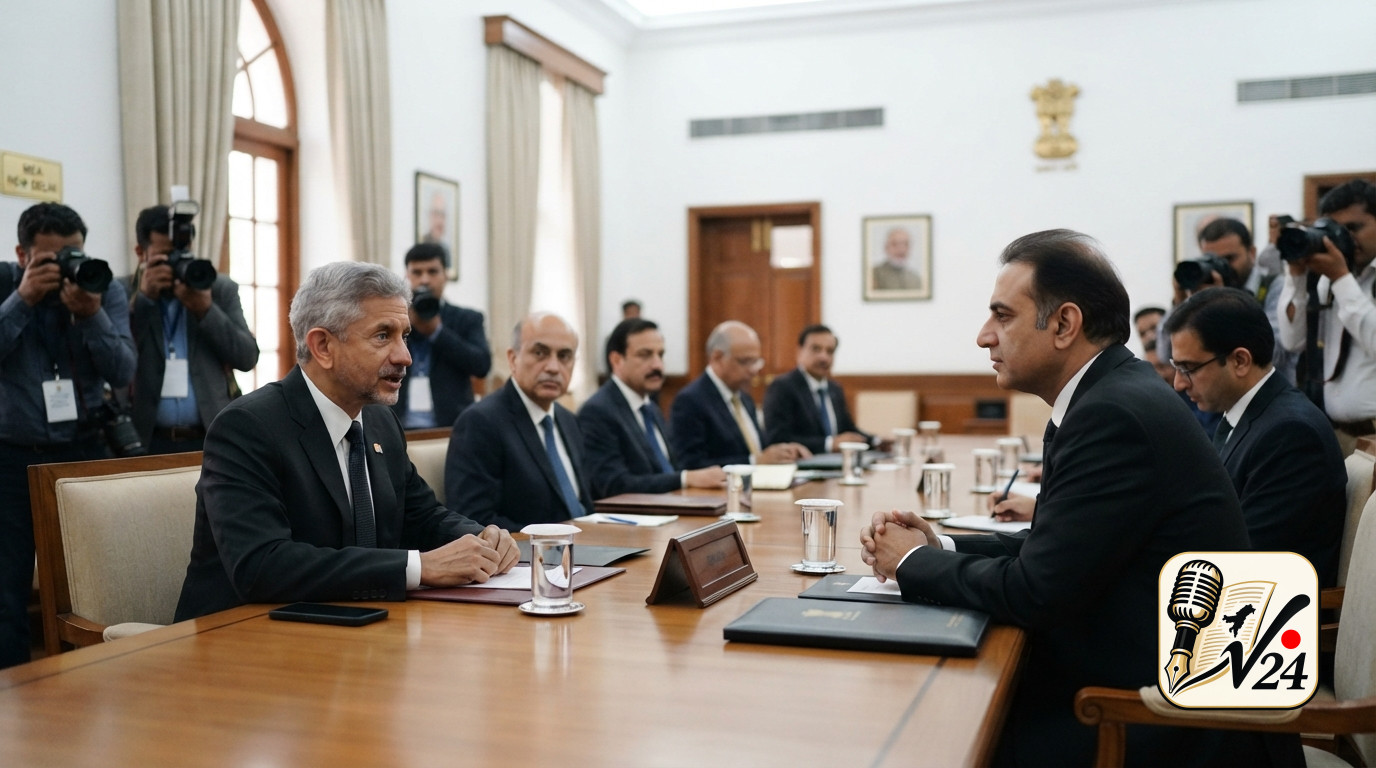
India's Ministry of External Affairs (MEA) summoned Pakistan's top envoy in New Delhi to issue a formal diplomatic protest regarding the collision between the two naval vessels. Demarching or summoning a diplomatic representative is an established state-level protocol used to convey formal displeasure, request official explanations, and register serious concerns over actions committed by another nation's military or government personnel. By summoning the Islamabad representative directly to the MEA headquarters in New Delhi, the Indian government sought to highlight the seriousness with which it views the physical contact between the naval ships in international waters. The diplomatic action signals New Delhi's intention to hold Pakistani authorities accountable for the actions of their naval vessel and to formally document the breach of standard maritime operating procedures at the highest diplomatic level.
How has the Ministry of External Affairs described the conduct of the Pakistani naval ship?
The Ministry of External Affairs explicitly characterized the conduct of the Pakistani naval vessel as unprofessional. In international naval parlance and maritime protocol, describing a warship's actions as unprofessional signifies that the ship failed to adhere to established international regulations for preventing collisions at sea, such as maintaining safe operational distances, communicating navigational intent, or exercising prudent seamanship. The MEA's designation underscores that the maneuver executed by the Pakistani ship endangered naval assets and personnel operating in international waters. By publicly and diplomatically labeling the actions as unprofessional, New Delhi placed responsibility for the unsafe tactical situation directly on the Pakistani naval command and its vessel crew, establishing a clear stance regarding the cause of the physical impact.
Who was summoned by New Delhi following the naval encounter in international waters?
Following the incident, New Delhi's Ministry of External Affairs formally summoned Pakistan's top envoy stationed in India. In diplomatic practice, summoning an envoy serves as the primary mechanism for a host nation to deliver official communications, protests, or demands directly to a foreign government. The summons directed Islamabad's representative to appear at the MEA offices to receive the official stance of the Indian government regarding the naval collision. This step elevated the maritime event from an operational defense dispute in the Arabian Sea to a high-profile diplomatic confrontation, ensuring that the matter is addressed at the senior ministerial and diplomatic levels of both countries.
When did the incident take place and what diplomatic timeline was established?
Available news reports and documentation indicate that the diplomatic protest was formally lodged and reported around mid-September, specifically with media records pointing to September 16, 2026. The diplomatic timeline moved rapidly following the physical collision at sea, leading directly to the MEA issuing the summons to Pakistan's top representative in New Delhi. While the precise hour and operational timeline of the collision itself are managed by military authorities, the rapid transition to diplomatic proceedings demonstrates the priority attached to the event by Indian national security officials. The swift issuance of the summons established an immediate official record of the encounter between the two military organizations in international waters.
What key facts regarding ship damage, casualties, or specific ship identities remain unconfirmed by source reports?
Based strictly on the available news reports from outlets such as The Times of India, NDTV, and The Hindu, several specific details concerning the collision remain unstated in the initial public reporting. The available reports do not name the specific Indian Navy ship or Pakistani naval vessel involved in the encounter, nor do they detail the precise class or type of warships involved. Additionally, the headlines and summary reports do not state whether any naval personnel sustained injuries during the collision, nor do they specify the exact extent of physical or structural damage incurred by either ship. Furthermore, the reports do not establish whether either vessel required assistance or if both ships were able to continue their deployments independently following the impact.
How do international maritime conventions address encounters and collisions between warships?
Warships operating in international waters are governed by standardized international rules, including the Convention on the International Regulations for Preventing Collisions at Sea (COLREGs), which mandate safe passage distances, clear signaling, and standardized maneuvering to avoid physical contact. When military vessels operate in close proximity, proper communication and predictable navigation are critical to avoiding accidental escalation or hazardous collisions. When a collision occurs, affected states typically utilize bilateral military hotlines or formal diplomatic demarches through their foreign ministries to resolve the incident, conduct investigations, and address potential liability or operational grievances stemming from unprofessional tactical behavior on the high seas.
Sources
More from National